BDSM Definition, Myths, and What It Really Means

Let's start with the BDSM basics. As mentioned, BDSM is a composite acronym: Bondage and Discipline, Dominance and Submission, Sadism and Masochism. Each pair represents a different aspect of kinky play:
Curious about BDSM but unsure where to start? The BeMoreKinky app offers over 189 custom activities spanning all BDSM categories, from 25 beginner bondage ties to 37 praise phrases, helping you explore safely and discover what resonates with you.
- Bondage & Discipline (B&D): Using restraints (rope, handcuffs, etc.) and rules or punishment games. For example, one partner might be tied up (bondage) or follow a set of instructions under threat of a playful "punishment" (discipline).
- Dominance & Submission (D/s): The power exchange aspect, where one person (the Dominant) leads or holds authority, and the other (the submissive) yields and follows. Could be something light, maybe one partner gets a little bossy for the night... or it can become a full lifestyle thing where the power dynamic runs round-the-clock.
- Sadism & Masochism (S&M): The giving or receiving of pain or intense sensation for pleasure. A sadist enjoys inflicting sensations (e.g. spanking, flogging) and a masochist enjoys receiving them, in an erotic or sensual context. Here's the key: what looks like "pain" from the outside can be very pleasurable or emotionally cathartic for the people involved.
These dynamics often overlap in any given BDSM encounter or "scene." For instance, a couple might engage in D/s roleplay where the Dominant orders the submissive to hold still for a spanking; that involves D/s, some Discipline, and a bit of S&M.
The acronym gives you the broad families, not the whole menu. Our list of sexual kinks shows just how many interests can sit inside and beyond them.
But not all BDSM has to include pain or bondage... sometimes it's purely about power or psychological play. The common thread is that one partner takes on a more controlling role and the other a more yielding role, in a consensual erotic game of make-believe that can feel very intense and real.
It's also important to know some basic roles and terminology in BDSM dynamics. For a deeper dive into the differences between these roles, see our guide on Dom/Top vs Sub/Bottom:
-
A Top generally means the person doing the action (tying someone up, flogging, giving orders, etc.). A Bottom is the person receiving the action. Usually top/bottom gets used when you're talking about the actual physical stuff.
-
A Dominant (or Dom/Domme) takes charge during a scene or in the relationship, while a submissive (sub) willingly gives up control. These terms are more about the headspace and power dynamic. There are many different types of Dominants to explore, each with unique approaches to leadership and control.
Often the Dominant is also the Top (and sub is the Bottom), but not always; a Dominant could order their submissive to flog them, so the sub's doing the action but still following orders. Roles can be fluid and creatively structured, the only "right way" is what all participants agree on.
-
A Switch is someone who enjoys both topping and bottoming, or both Dominant and submissive roles, depending on the situation or partner. Plenty of folks are flexible like that; even if someone's mostly Dominant, they might flip things around now and then with certain partners just for kicks.
Behind all these roles is consent and negotiation. People talk beforehand about boundaries, what they want, what's off-limits. Yeah, might seem like it kills the mood to have a chat first, but actually it builds trust and gets the anticipation going. As one classic BDSM guide explains, "BDSM is... done in a safe, consensual, non-abusive manner and in an erotic context."
We create a sort of adult playground where we agree on the rules. Once the scene begins, we act like a strict Mistress and her slave, or a wild sadist and willing masochist, or a pet and owner, or whatever scenario we've chosen... but underneath the role-play, everyone knows it's a collaborative experience.
In the words of kink educator Jay Wiseman, an experienced Dominant, "SM relationships are ultimately equal relationships." Each partner has power, just in different ways. The submissive trusts the Dominant with their wellbeing, and the Dominant's responsible for making sure the scene works for both of them. It's like a two-way dance built on trust.
Another central concept in BDSM is "Safe, Sane, and Consensual" (SSC). For an in-depth exploration of these safety philosophies including the modern SSC vs RACK frameworks, see our dedicated guide. This motto reminds us that all play should be safe (minimizing risks and not causing unintended harm), sane (everyone is in a sound state of mind, not impaired or pushed beyond rational limits), and consensual (everyone involved fully agrees and can stop at any time).
In practice, this means using tools carefully, knowing any medical risks, and having emergency plans... but also making sure the emotional aspect is handled with care. Consent is what completely separates BDSM from abuse: if someone is coerced or can't say no, it's not BDSM. Kink communities take this very seriously.
Many people also use safewords, a pre-agreed word or signal (like "red" or "banana") that instantly means "Stop now, no questions asked." Using a safeword is a healthy part of play; it doesn't mean anyone failed, it's just a safety brake. In fact, even Dominants can have a safeword or signal to pause the action if they need to check in or something feels off. Remember, tops and Dominants are human, too; they have limits and need care as well.
Power exchange can sound intense, but think of it like a trust fall in a team-building exercise... except a lot sexier and more fun. The thrill of BDSM comes from that trust and intimate vulnerability. One partner gets to let go of control, knowing their partner will catch them (figuratively, and sometimes literally!). The other partner gets to take control, with the responsibility of using it to create a mutually fulfilling experience.
When it works, both partners feel a kind of flow or chemistry that can be incredibly bonding. As BDSM author Janet Hardy notes, "when it flows, we feel the power moving through both of us… we're all flying together." That ecstatic connection, whether it's through the adrenaline of physical intensity, the erotic charge of calling someone "Sir" or "Madam," or the relief of expressing a hidden fantasy, is often what people describe as the real payoff of BDSM. Some practitioners even explore erotic hypnosis to deepen this altered state of consciousness and connection.
Finally, BDSM dynamics can be sexual or not. Sometimes a scene leads to penis-in-vagina sex or other sexual acts, but not always. A BDSM "play party" might involve people whipping, tying, or role-playing without any intercourse at all. Some folks just sprinkle in a little spanking or power play alongside regular sex.
What defines BDSM isn't a specific act, but the consensual power dynamic and erotic intention behind it. Two people could be doing something as mundane as one person kneeling and massaging the other's feet; if they frame it as Dominant/submissive play, with one serving and one being served, that is BDSM.
On the flipside, a couple could be having the kinkiest-looking rope suspension or intense flogging scene... but if it's done without consent or regard for limits, it's not ethical BDSM. Intention and agreement are everything.
In summary, BDSM basics come down to this: It's a variety of erotic practices and roleplays built around an exchange of power and heightened sensations or emotions. When done right, it's adult play rooted in talking things through, respect, and trust. With those basics in mind, let's look at how BDSM relationships stack up against the so-called "vanilla" relationships most of us heard about growing up.
Understanding BDSM vs Vanilla Relationships
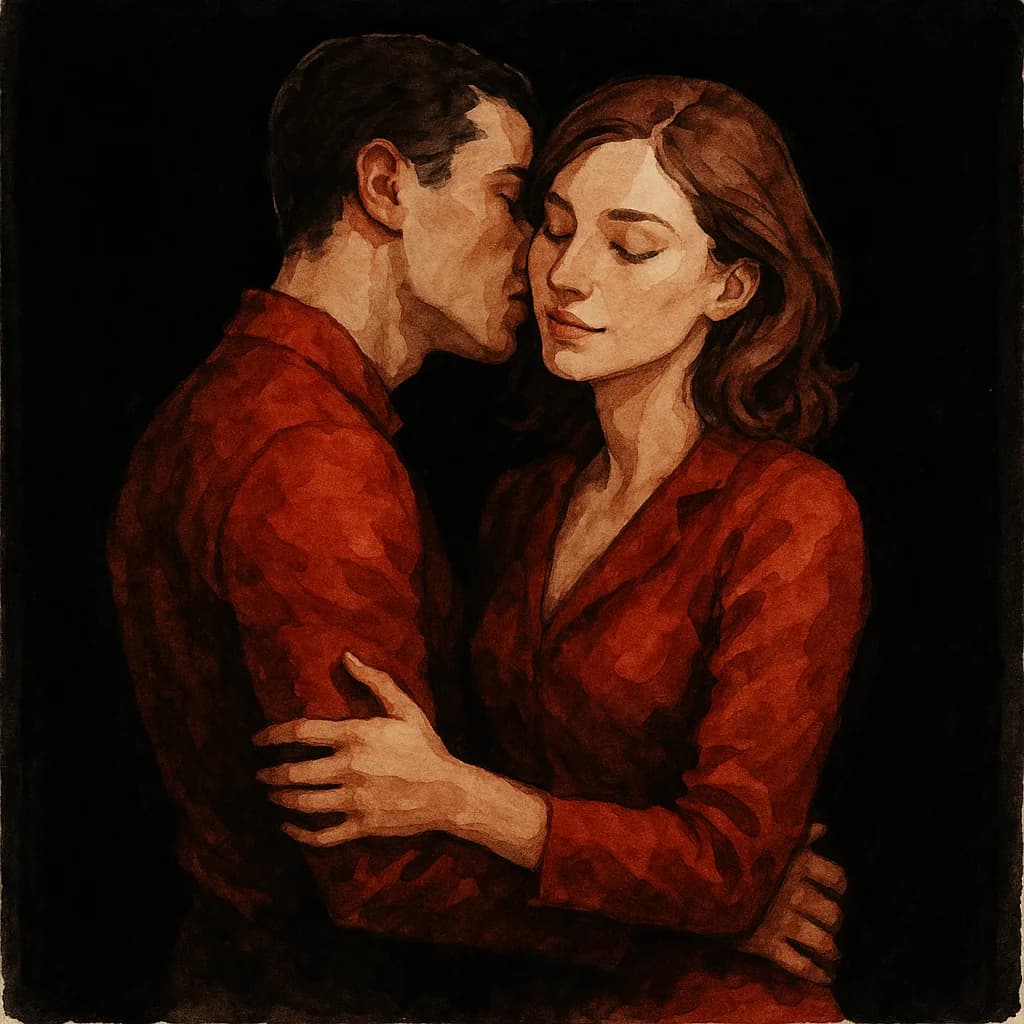
In everyday conversation, you might hear kinksters refer to "vanilla" relationships or sex. Vanilla is not an insult; it simply means conventional, non-BDSM interactions, analogous to plain vanilla ice cream being the "default" flavor.
In many ways, BDSM vs vanilla is not a strict binary but a spectrum of preferences, plus a difference in how consciously people negotiate their needs.
First, the presence of structured power dynamics is a key distinction. In a vanilla relationship, power-sharing is usually implicit; ideally, decisions and responsibilities are split fairly equally, or each partner takes lead in certain areas based on ability. But these power arrangements are seldom explicitly discussed as power.
In a BDSM relationship, by contrast, power is the name of the game. Partners intentionally negotiate who will have authority or control and when. For example, a married couple might have a Dominant/submissive agreement that the submissive partner will defer to the Dominant's decisions on household matters and address them as "Sir" or "Ma'am" at home. That's a level of deliberate power exchange that goes beyond the unspoken norms of vanilla relationships.
Yet outside their agreed roles, they might appear like any other loving couple, handling kids, careers, and life in a balanced way. Some BDSM pairs limit their dynamic to the bedroom or specific "scenes" only. Others enjoy a 24/7 D/s lifestyle, where elements of the hierarchy persist all the time.
The crucial point is choice: in BDSM, unequal power roles are embraced consciously and consensually for mutual benefit, rather than assumed by default or due to societal tradition.
Another big difference is communication style and frequency. People in the BDSM community often say "kink requires communication like oxygen." Before and after any kinky activity, there's usually a lot of talking: discussing limits, fantasies, and feelings.
Worth mentioning too; being vanilla isn't some kind of insult. Vanilla simply means you prefer standard intimacy without explicit power games or fetish elements. It's a valid preference. Many BDSM enthusiasts enjoy occasional vanilla sex themselves.
For instance, a Dominant might just want to cuddle and have gentle intercourse with their partner some nights, no ropes or roles involved; that's vanilla sex between two people who also enjoy kink on other days. Conversely, someone might mostly be vanilla but occasionally love a bit of spanking or tie-and-tease. Human sexuality is fluid.
The BDSM vs vanilla distinction is more about mindset and agreement than a permanent identity. The good news is, whether you identify as vanilla or kinky, the guiding principle is the same: mutual consent and pleasure.
Trust and safety concerns might also be perceived differently. A person coming from a vanilla background might see activities like flogging or tying someone up and worry, "Isn't that dangerous or harmful?" From the outside, BDSM can look extreme or even frightening because it plays with power and pain, things we usually avoid in relationships.
Normally if someone slaps their partner or bosses them around constantly, that's bad news. But in BDSM, those actions happen within a consensual framework with safewords and aftercare. It's almost an alternate universe of relationship behavior, where acts that would be abusive in real life are transformed into sources of intimacy and excitement.
It requires a high level of trust.
On the flip side, BDSM relationships are still relationships. They involve love, affection, compromise, all those human things. A Dominant may look like they "hold all the power," but really they might be doting on their sub every day, avoiding triggers, remembering to grab their favorite post-scene snack, sending sweet "good girl/boy" texts.
A submissive might seem to be "doing everything they're told," but good Dominants listen closely to a sub's moods and non-verbal signals, effectively serving the submissive's needs for structure or sensation.
As Mollena Williams-Haas, a well-known BDSM educator and slave-identified submissive, wisely points out, your submission is yours to own and care for, even when you give it to someone. It's not abdication of self-responsibility. In other words, a submissive isn't a passive doormat; they are an active participant who maintains personal boundaries and brings their full self into the dynamic.
A Dominant isn't some infallible dictator either; they're human, they make mistakes, they get insecure sometimes. In long-term BDSM relationships, both partners usually drop the roles when it's time to talk about bills or kids or what's for dinner, unless they've chosen a full-time power thing.
To sum up, BDSM vs vanilla relationships differ mainly in intentional power structuring and the communication around it. BDSM relationships make the invisible dynamics of power and desire visible and negotiated. This can lead to incredibly intimate understanding... but it also requires effort, honesty, and mutual respect, just as any healthy relationship does.
Vanilla relationships, on the other hand, tend to rely on unspoken norms and a more subtle give-and-take of influence. Neither's better than the other, just different ways of relating. Actually, a lot of healthy BDSM principles (consent, clear communication, respecting boundaries) work great for vanilla couples too.
Biggest BDSM Myths

Even with BDSM becoming more visible, misconceptions still hang around. Let's clear up some of the big ones. Here's straight-up BDSM advice on what's myth and what's reality:
-
Myth 1: "BDSM is just abuse/violence by another name." Reality: BDSM is categorically different from abuse because of consent and mutual respect. In healthy BDSM, all participants have each other's well-being as the top priority. Someone says "stop," everything stops. Scenes are negotiated in advance, and anyone can withdraw consent at any time.
Abuse is when one person forces power on another without consent, trying to harm them. Might look similar to the untrained eye (one person tying another up, inflicting pain), but the emotional and ethical context is completely opposite. A consensual sadomasochistic scene is more akin to a daring dance or an extreme sport; both partners have agreed to the routine and signal each other throughout.
In fact, many BDSM couples report being more connected and communicative than vanilla couples. As one blogger wrote, "BDSM without consent is just assault, and nobody in the scene tolerates that." Kink communities are usually very quick to ostracize anyone who breaks consent or behaves unsafely on purpose.
So if you think BDSM means one person really wants to hurt someone, no; it means both people might enjoy edgy sensations or roleplays, but underpinned by trust and care. The presence of safewords, checking in, aftercare, these are all things abusers decidedly don't do, but BDSM players do routinely.
-
Myth 2: "People who like BDSM must be damaged or mentally ill." Reality: Liking BDSM is just a sexual/relationship preference, not a symptom of illness. Enjoying submission or pain does not mean you "want to be abused" or that you have low self-esteem. Similarly, enjoying domination doesn't mean you're a closet psychopath. Plenty of well-adjusted, successful folks are into kink; could be your doctors, teachers, neighbors who unwind by getting tied up or tying up a lover.
Research has not found higher rates of psychopathology among BDSM practitioners; in fact, some studies (such as a 2013 paper in the Journal of Sexual Medicine) found BDSM participants scored as well or better on certain mental health indicators than the general population. The takeaway is that consensual BDSM, when practiced in a safe context, can be part of a healthy personality and lifestyle. Some use it for stress relief, emotional exploration, or just fun.
True, some trauma survivors might gravitate to BDSM as a way to reclaim control or redefine experiences, and when done thoughtfully that can even be healing. But that's very different from saying "all kinksters are damaged."
As kink-aware therapist Jack Morin wrote in The Erotic Mind, "eroticism is dynamic and paradoxical because it springs from the interplay between your attractions and the obstacles that stand in your way." In other words, it's normal for people to eroticize a bit of taboo or intensity (like the "obstacle" of pain or power difference) as part of their sexuality. It doesn't mean something's wrong with you; it means you're human and complex.
-
Myth 3: "The Dominant partner has all the power and the submissive has none."

Reality: A casual observer might think the Dom is doing whatever they want and the poor sub just has to take it. In truth, a good Dominant is laser-focused on the submissive's reactions and boundaries. You could say the submissive holds the most important power: the power of final consent. The sub's got the safeword to stop everything; the scene basically revolves around what the submissive wants (and the Dominant too, of course).
There's a saying in kink communities: "the Dominant may be steering the ship, but the submissive charts the course." The Dominant's control is granted by the submissive. If a submissive isn't happy, a caring Dominant will adjust... because a true Dom earns devotion, they don't demand it by right.
Meanwhile, submissives aren't passive lumps; they actively guide the energy with their responses. Some subs tease or play "bratty" to get a rise out of their Dominant (all in good fun and agreed style), demonstrating that the dynamic is quite interactive. And remember Mollena's point: it's the submissive's job to safeguard their submission and make sure it's respected, which means subs have agency and responsibility.
In healthy power exchange, there's a feedback loop: more the sub trusts and surrenders, more the Dom feels empowered; more the Dom uses power skillfully and with care, more the sub wants to surrender. It's symbiotic.
If one side stops holding up their end of that loop (say the Dom stops being attentive or the sub stops being receptive), the dynamic falls apart. So it really is a team effort, not unilateral control.
-
Myth 4: "BDSM always involves sex/orgasms" (or "BDSM is just about weird sex toys"). Reality: BDSM is about erotic energy, which isn't always the same as traditional sexual activity. Some BDSM scenes are explicitly sexual, yes; they might include oral sex, intercourse, vibrators, etc., as part of the play. But plenty of BDSM encounters involve no direct genital contact or orgasm at all, yet are deeply satisfying on their own terms.
For example, a person might have a fetish for bondage, the feeling of being tied tightly and helpless, and that alone gives them intense pleasure (sometimes called "rope bliss" or even non-genital orgasms). Another example: a Dominant might instruct a submissive to kneel and recite a mantra of devotion while being lightly caned; both partners could finish the scene feeling very fulfilled without any conventional sex.
Some people even choose to keep BDSM and intercourse separate, perhaps because the D/s dynamic is mostly psychological for them, or they enjoy sensation play as an end in itself. And yes, it can be a fully clothed experience too (erotic doesn't always mean naked; think of the allure of a Dom in high boots, or a sub in elegant lingerie simply feeling objectified).
So, while many do blend kink with sex, it's not a requirement. BDSM is a broad spectrum of activities that aim to create some combination of excitement, connection, release, and sometimes orgasm, but the journey is as important as the destination.
Also, regarding toys: sure, there are lots of fun tools (floggers, cuffs, paddles, gags, you name it). But you don't need fancy gear to do BDSM. A necktie for a blindfold, a firm hand for a spanking, and some imagination can be plenty. Imagination and trust are the core ingredients, not the toy bag.
-
Myth 5: "If I'm dominant in daily life, I must be Dominant in BDSM (and vice versa)." Reality: Personalities in daily life don't always map to preferences in the bedroom. You might be a high-powered boss making decisions 24/7, yet what truly relaxes you is handing over control in a consensual scene, being told what to do for once. This is actually common; many powerful people find freedom in becoming a submissive in private, a phenomenon sometimes playfully called "CEO by day, slave by night."
Conversely, someone shy or gentle in public might unleash a fierce Dominant persona in kink; BDSM can be a safe theater to explore sides of oneself that society doesn't usually allow. As BDSM educator Dossie Easton wrote, role-play and power play let us "enact parts of ourselves that otherwise would have to stay hidden -- what fun!" In other words, kink roles are chosen archetypes or energies, not fixed personality traits.
You might even surprise yourself over time; a person who starts purely sub might discover an inner Dom after a year (this happened to one of the authors of The New Topping Book, Janet Hardy, who was exclusively a Top for 15 years then later identified as a switch!). There's no rule that your kink role has to mirror your day-to-day temperament. The only rule is to be honest about what excites and fulfills you.
If you're not sure, try exploring in low-pressure ways; some folks switch roles to gain empathy or discover new things, like maybe a Dominant bottoms in a rope scene just to feel what their sub feels. At the end of the day, BDSM is very individual. Labels like Dom and sub are useful, but they don't define your whole identity. Feel free to be a strict boss at work and a purring kitten to your partner at home, or a caring mom in life and a formidable Goddess in the dungeon. Humans contain multitudes.
-
Myth 6: "BDSM requires elaborate gear, dungeon rooms, and perfect bodies in leather." Reality: This is more of a practical misconception, fueled by BDSM porn or music videos (think Madonna's leather getups). In truth, BDSM can be as simple or as high-tech as you want. You absolutely do not need a fully equipped dungeon or expensive fetish clothing to get the benefits.
A lot of real-world kink happens in ordinary bedrooms with the lights low and nothing but a couple of pillows, perhaps some improvised restraints, and a willing imagination. Don't let Pinterest or fetish fashion ads convince you that kink has a dress code or a cost barrier. Sure, some folks love investing in custom latex or building a home dungeon; that's their hobby, like any other. But beginners especially should know: you can dip your toes in without spending a dime.
Psychology and creativity are more important than props. A word whispered in your lover's ear, "Tonight, you're mine, understand?", can ignite a hotter D/s vibe than the fanciest bondage frame if it hits the right inner fantasy.
As for bodies: BDSM is for every body, literally. You do not have to look like a gym model to be a stunning Dominant or an irresistibly sexy submissive. Confidence, authenticity, and rapport outshine six-pack abs any day in this realm. In the BDSM community, you'll see all ages, shapes, sizes participating. When people are in that intense bubble of a scene, they're feeling the adrenaline and connection, not worrying about cellulite or dad-bods. Don't let self-consciousness or lack of gear stop you if you're curious about power exchange. Start with whatever you have, add toys or costumes later if you both dig it.
-
Myth 7: "Engaging in BDSM means I have to go all in 24/7 or it's not real." Reality: Kink is not an all-or-nothing proposition. You can incorporate as much or as little BDSM into your life as suits you. Some couples might only roleplay or use light bondage once in a blue moon, others make it a regular bedroom thing, a smaller subset go for full lifestyle D/s or Master/slave arrangements. It's a menu, not a fixed meal.
There is no certification that says you must endure X level of pain or call your partner "Master" at all times to count as doing BDSM "properly." Your BDSM is valid at whatever level feels right. If you only ever experiment with a bit of spanking and playful restraint, and that gives you both smiles and tingles, wonderful! You don't have to escalate unless you want to.
The idea that everyone is doing some hardcore stuff is false; there is tons of "soft BDSM" (like sensory play with feathers and ice, mild dominance like one partner pinning the other's arms, etc.) that still falls under kink. Also, interest can ebb and flow. You might have phases of more intense exploration and times where you go back to mostly vanilla sex. That doesn't mean you're not a "true" kinkster. Just means you're human with varying moods and circumstances.
Hopefully clearing up these myths helps you approach BDSM with a clearer mind. Kink isn't some horrifying dark side that corrupts souls, and it's not just a frivolous game for weirdos either. It's simply a set of practices and roles that, for the people who enjoy them, unlock profound pleasure, intimacy, and personal expression. As one sex therapist put it, "BDSM is a parallel language of love for those who speak it, not better or worse than vanilla, just different." If you don't speak it, that's okay; but if you're curious to learn, know that many of the scary stories out there are just that: stories. Real experts and longtime players focus on sanity, consent, and satisfaction, not shock value.
If you're intrigued and wondering how to actually get started, maybe you're thinking: "Alright, sounds interesting and not as crazy as I thought, but how do I bring this up with my partner? What are the first steps?" Check out our BDSM communication guide for beginners or learn how to establish boundaries with a Yes/No/Maybe list. Our guide to BDSM for beginners pulls those first steps together in one place.
Final Thoughts: BDSM stands for more than just the acronyms of bondage, discipline, dominance, submission, sadism, and masochism. It stands for a philosophy of play, trust, and intimacy. It invites us to tap into the theater of our desires, to pretend, to feel, to let go or take control in ways "normal life" doesn't permit, yet in a responsible, consensual manner. Power exchange, when done with love and care, can be a profound extension of a relationship's communication and passion. As famed Dominatrix and author Midori once said, "In BDSM, we don't hide our scars or our cravings; we use them. We turn them into art."
So if you're curious, don't be afraid to peek behind the curtain. You might find that the world of BDSM is not a cold dungeon of depravity as the misconceptions suggest, but rather a warm, welcoming space where adults consensually make their fantasies come alive, with a whip in one hand and a first-aid kit in the other, figuratively speaking! It's a realm where pleasure has many forms, and power is something you share, not steal. Whether you just take a few lessons from BDSM about communication or dive fully into the lifestyle, knowing what BDSM stands for, at its heart, will enrich your understanding of human sexuality's vast potential.
Happy exploring, and may your journey be filled with safety, sanity, and consensual satisfaction. 🖤🔗💋