Medical kink, medfet, and how to play doctor without getting hurt
I’ll be honest with you: the first time I properly understood medical kink, I was embarrassed by how long it took me to get it. Because once you do get it, it’s blindingly obvious. Think about the last time you were at the doctor. Not the waiting room with its three-year-old magazines, but the actual examination. Someone in a position of total authority tells you to undress, to lie down, to open wide, to hold still while they put their hands on you wherever they please. You comply, because that’s the deal. You don’t question it.
Now imagine that dynamic, deliberately, with someone you trust and find attractive. The snap of a glove. The cool press of a stethoscope. The words ”I’m going to examine you now” in a tone that leaves no room for argument. You see where this is going.
This is medical kink, also known as medical fetishism or “medfet,” the eroticisation of medical settings, procedures, equipment, and roles. The doctor’s office as a stage for power exchange, vulnerability, and consensual play. It fascinates me. The power dynamics don’t need to be manufactured, they’re already built into the scenario. One person wears the white coat, the other wears a paper gown that doesn’t close at the back, and the whole thing just... works. Whether the play is tender and nurturing, clinically cold, or downright terrifying depends entirely on what gets your pulse going.
I’m going to walk you through what medical kink actually is, why it pushes so many buttons (psychological and otherwise), what kinds of scenes people play out, and, most importantly, how to explore all of it without anyone ending up in an actual emergency room. If you’ve been quietly turned on by medical scenarios for years and feeling weird about it, I hope this helps.
What Is Medical Kink?
It’s a broad umbrella, frankly broader than most people expect when they first stumble across the term. Some people are turned on by specific medical objects: the look of a stethoscope, the feel of a cast, the sound of gloves being pulled on. Others are drawn to the procedures themselves, or to having body parts attended to under a clinical gaze, including attraction to orthopaedic braces and similar equipment. There are a few main flavours:
Role-play scenarios are probably the most recognisable. Medical play is a type of role-play where the doctor or nurse takes the dominant role and the patient takes the submissive one, entirely at the medical professional's mercy. But honestly, any combination works: therapist and client, surgeon and subject, optometrist and patient if that’s what does it for you. Nobody’s going to check your credentials. The roles exist to serve whatever dynamic turns you both on.
Attire and setting do a lot of the heavy lifting. White coats, scrubs, nurse uniforms, latex gloves, face masks, those little reflex hammers, even a simple exam gown for the “patient” immediately shifts the mood into something clinical and vulnerable. I think this is partly why medfet has such mainstream appeal even when people don’t realise it. Research suggests medical play appeals to experienced kinksters and more vanilla players alike, which is why many BDSM dungeons keep an examination table or dentist-style chair as standard equipment, and medical play often involves an array of props found in medical settings. Put someone in a paper gown and the power dynamic writes itself.
Our own BeMoreKinky data points the same way. “Conduct roleplay examination” lands at 80.4% yes/maybe, and Doctor & Patient Exam is strong from both sides: 75.0% for doms and 69.7% for subs. Even when you zoom out to role preference, doms reach 62.3% yes/maybe compared with 51.2% for subs. To me, that says the charge often lives in the authority to examine, instruct, and decide what happens next, not in how many props you own.

Activities range widely. At the gentler end, you’ve got basic exam rituals: taking a pulse, checking blood pressure, shining a light in someone’s eyes, listening to their breathing. Then there are the more intimate examinations: breast exams, genital checks, prostate exams. And for those who want to go deeper (and have done their homework), there’s procedure play, which can spill into adjacent bodily-fluid kinks: dressing up in sexy attire while doing real medical procedures like enemas, catheters, and needle play, even simulated anesthesia, all of which feature in the broader medical play canon. Some of that gets into serious edge-play territory, which our ultimate guide to medical fetish covers properly.
Then there are the specific fetishes sitting under this umbrella that have whole communities of their own. Temperature-taking fetishism is a thing, particularly the old-fashioned rectal thermometer variety, which has an undeniably submissive quality to it. Enema fetishism, technically called klismaphilia, has a devoted following. Some people are into dental equipment, casts, braces, or medical gags. And plenty of medfet enthusiasts are drawn to the purely sensory experience: the snap of those gloves, the smell of rubber, the sight of gleaming surgical steel instruments laid out on a tray. That visual alone (steel on white cloth, the implied threat and promise of it) can be enough to get someone’s blood pumping.
If it exists in a healthcare setting, someone out there has sexualised it: uniforms, gowns, bandages, masks, gags, needles, clamps, intimate examinations, and restraints, the lot. Medical kink overlaps heavily with BDSM when power exchange or intense sensation is involved, but it isn’t always about pain or control. Sometimes it’s about being looked after. Sometimes it’s about being exposed and examined with a thoroughness that would make you squirm in a real doctor’s office, and that’s exactly the point.
Let me put this plainly: medical play is make-believe. Even a forced-exam fantasy has to be agreed in advance, by people who can stop it. However elaborate the props and dialogue, nobody is actually practising medicine. No-one is treating a real condition. That line between fantasy and reality matters more in this kink than in most others, because the potential for real harm is higher when you’re playing with medical equipment and procedures. Research on alternative sexual practices backs this up: the people doing this well tend to rely on explicit negotiation around boundaries, roles, safety, and vulnerability, not vibes and crossed fingers (Summers and Zidenberg, 2025). Keep that in the front of your mind.
Why Medical Scenarios Can Feel Erotic
On the surface, a doctor’s exam is about as sexy as a tax return. Cold room, fluorescent lights, paper gown that doesn’t close at the back. So why does it get people going? Because when you strip away the NHS décor and really look at what’s happening in that room (the power dynamics, the vulnerability, the enforced intimacy with a near-stranger who gets to touch you wherever they deem necessary) it starts to make a lot more sense.
I think medical kink taps into several psychological currents at once. That’s what gives it such force.
Power and authority. In a medical setting, the doctor holds all the cards. They have the knowledge, the tools, and your implicit permission to do things nobody else in your life gets to do. The patient is expected to comply. When a doctor tells you to bend over, you bend over, entirely at the medical professional's mercy. If you’re someone who gets off on D/s dynamics, this built-in power imbalance is right there for the taking. The patient gets to feel helpless and controlled; the doctor gets to feel commanding and needed.
Vulnerability and helplessness. A real appointment already has exposure baked in. You’re undressed, watched, and told to stay still while someone pokes, presses, or checks something you can’t see. In a consensual erotic context, that vulnerability becomes a rush. You’re at your “doctor’s” mercy, and if you want to surrender, that’s incredibly hot. Kink educator Kenneth Play notes that ”medical play can evoke emotions such as helplessness,” tapping into that deep desire to let go of control entirely, including a sense of nurturing and care, drawing on more than fifteen years of kink educator experience.
I think this is especially appealing for people who carry a lot of responsibility in their everyday lives. Being reduced to a compliant patient who simply does as they’re told can be a huge relief. It’s permission to be completely passive, to just experience without any pressure to perform. One medfet enthusiast put it perfectly: ”As a patient, I love being told what to do, being told to bend over the table… I don’t have to worry about performance or how I look. I can just enjoy the procedure.”
There's a paradox buried in here that Jack Morin identified in The Erotic Mind and that I find genuinely clarifying: "Have you ever noticed how submitting to a dominant other sometimes allows you to join or even coopt his or her control? Highly refined surrendering can give 'powerless' practitioners nearly total control." The patient lying still on the table isn't merely acted upon; they're in command of the entire scene's emotional reality. The "doctor" can only perform authority if the patient consents to receive it. That inversion is why the submissive role in medfet is so satisfying for people who are used to being in charge everywhere else: it's not an abdication of power, it's a very specific, very deliberate exercise of it.
And from the other side? Having someone trust you that completely, giving you full control over their body, that's heady. I know that feeling well enough from other D/s contexts to tell you: it doesn't get old.
Nurturing and care. Not every medical scene is strict and clinical. Plenty have a strong caregiving element: a gentle nurse soothing a frightened patient, a doctor “healing” someone with intimate, tender attention. The mix of compassion with physical intimacy can be very erotic, and I think this aspect gets overlooked. Some people are drawn to medfet specifically because they long to feel looked after, to be fussed over and tended to by someone who has complete authority over their wellbeing. Being cared for and being in someone’s power at the same time, that does something to people. Don’t underestimate it.
Taboo and shame. We all learned early on that medical exams are Not Sexual. Strict rules, clinical detachment, professional boundaries, for very good reason in real life. So deliberately eroticising the whole thing? That’s breaking a pretty big taboo. And breaking taboos is a hell of an aphrodisiac: the stigma and potential consequences can be a turn-on for precisely that reason. There’s a specific adrenaline that comes from doing something “wrong” in a safe context. Part of your brain is saying I really shouldn’t be enjoying this, and that very thought makes it hotter. Anyone who’s ever experienced kink will recognise that feeling.
Shame and arousal are more closely linked than most people want to admit. By indulging in a scenario that would normally be mortifying (naked under harsh lighting, being “examined” in your most private areas) you can paradoxically neutralise the shame by charging right through it. Phone-sex veteran Tonya Jone Miller puts it well: ”There’s something about medical kinks that really absolves guilt and shame,” because you’re doing something everyone has to do at some point, just with a very different ending.
And for those who enjoy erotic humiliation? The medical frame is perfect. The doctor scolds the patient, implies their body is ”dirty” or ”infectious”, pushing shame buttons in exactly the right way. All within a structure that gives both people permission to go there. Built-in humiliation with a built-in excuse. I can see why people love it.
Ritual and anticipation. Medical exams have a ritual quality that lends itself well to erotic play. Forms to fill in, vital signs to take, specific sequences of touch and inspection. Your partner in a white coat, slowly laying out instruments, snapping on gloves one finger at a time, methodically examining you head to toe... that slow burn, that clinical precision, is essentially prolonged foreplay. And if you’re anything like me, it’s the anticipation that gets you more than the act itself.
Anticipation is one of Jack Morin’s “four cornerstones of eroticism” (the longing for what hasn’t happened yet) and all four of Morin’s cornerstones intensify wanting something all the more. A medical scene is packed with “not yet” moments, including that powerful charge that comes from breaking taboos. As one enthusiast described: ”There’s the moment of anticipation before a gloved finger enters my anus. I love that ritual around it.” You know what’s coming. You can savour it and dread it at the same time.
Sensory and fetishistic elements. For some people, it’s less about the dynamic and more about specific sensations or objects. Latex on skin. Rubbing alcohol in the air. A needle glinting in the tray. A heart monitor blipping away in the corner. People into medical gear describe a visceral, almost Pavlovian arousal from these stimuli. I'm the same way with certain BDSM objects: a collar, a pair of cuffs, and the reaction is immediate, before I've even consciously registered what I'm looking at. Online, medfet enthusiasts share their specific triggers: one said ”For me, it’s the stethoscope. The idea of being able to hear internal sounds has always fascinated me,” while another didn’t mince words: their biggest fetish was a ”big rectal thermometer,” followed by ”anything else that can be inserted into the ass.” Alright then! Can’t fault that for honesty. Medical settings offer a sensory palette (cold metal, pinpricks, thick fluids, buzzing machines) that you simply don’t get elsewhere.
Reclaiming and rewriting. This one is more complex, and I think it matters. Some people who had negative medical experiences in the past (frightening childhood procedures, hospitalisation, shame about their bodies) find their way to medfet as a way of reclaiming control. By eroticising something that once caused fear or hurt, they flip the script on their own terms. Professional dominatrix Mistress Odette notes that many of her medical-fetish clients ”use this sort of scenario to take some kind of charge over something that they feel hurt them in the past, by being the one who chooses to eroticize it.” Choosing to play through a scary scenario in a safe, controlled environment can lessen its power over you.
I love that: the idea that kink can be a way of rewriting your own story, on your terms. It echoes something I believe strongly: that BDSM, done well, can be healing in ways that people outside of it rarely understand. But (and this is an important but) if you have deep medical trauma or PTSD, diving straight into a medfet scene could be triggering rather than healing. That warning matters because research on sexual pleasure after cancer describes how invasive treatment can leave people experiencing their bodies as medical objects, disconnected from pleasure and autonomy (Offerman et al., 2025). Kink can be cathartic, absolutely, but it isn’t therapy. It isn’t a substitute for professional help when you need it. Be honest with yourself about where you are before you play.
And sometimes? It’s just fun. Not every kink needs a deep psychological explanation, and I’ll fight anyone who insists otherwise. Some people play doctor because it’s a laugh, because it’s theatrical, because putting on a white coat and telling someone to cough while you grip their balls is a bloody good Friday night. Role-play lets you try on personas you’d never inhabit in your real life, and that freedom, the permission to be someone else for a while, is a hell of a rush. Shy about being dominant? Blame it on Doctor’s Orders. Too self-conscious to ask for what you want? Let your “symptoms” do the talking.
Add in a little fear (what is that “doctor” going to do to me?) and, as Mistress Odette puts it, ”there’s something about being a little scared that can turn you on”. When that fear is balanced with trust, it hits different.
If none of this appeals to you, that’s completely fine. Your kink is not my kink, and this one isn’t for everyone.
Common Medical Kink Roles and Fantasies
I’ve come across these scenarios in forums, in fetish literature, in conversations at events, and certain ones come up again and again. This barely scratches the surface.
Doctor and Patient is the classic, and it comes in more flavours than you’d expect. There’s the strict doctor, nervous patient dynamic, all cold authority and clinical orders, the patient blushing and protesting while the doctor insists it’s all for their own good. Consensual non-consent energy, embarrassment, authority: it hits several buttons at once. Then there’s the caring doctor, grateful patient version, which is gentler, nurturing, concerned, the thorough examination gradually becoming pleasurable. And there’s the more explicitly dark corrupt doctor fantasy, where the medical professional knowingly exploits their position. (That last one requires particularly careful negotiation. You can probably see why.)
You can get more specific, too. Therapist or psychiatrist scenes focus on mental authority rather than physical, think naughty hypnosis, or that beautifully ridiculous 19th-century practice of doctors treating “hysteria” with orgasms (yes, really, look it up).
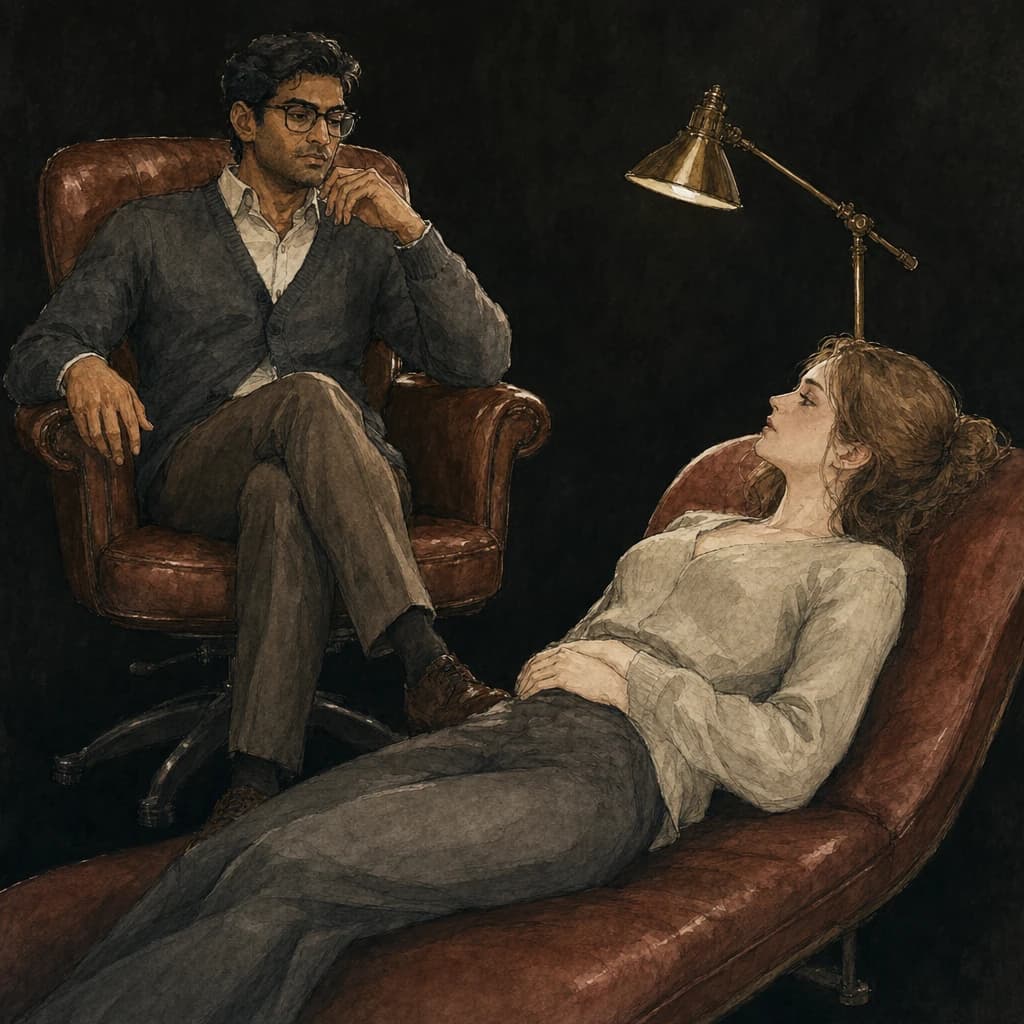 Gynaecologist and patient is extremely common, as is urologist and prostate exams. Dermatologists doing full-body skin checks. Physical therapists helping clients stretch in ways that go well beyond the treatment plan. Basically, if it exists as a legitimate medical specialty, someone somewhere has made it sexy. I’m not even surprised any more.
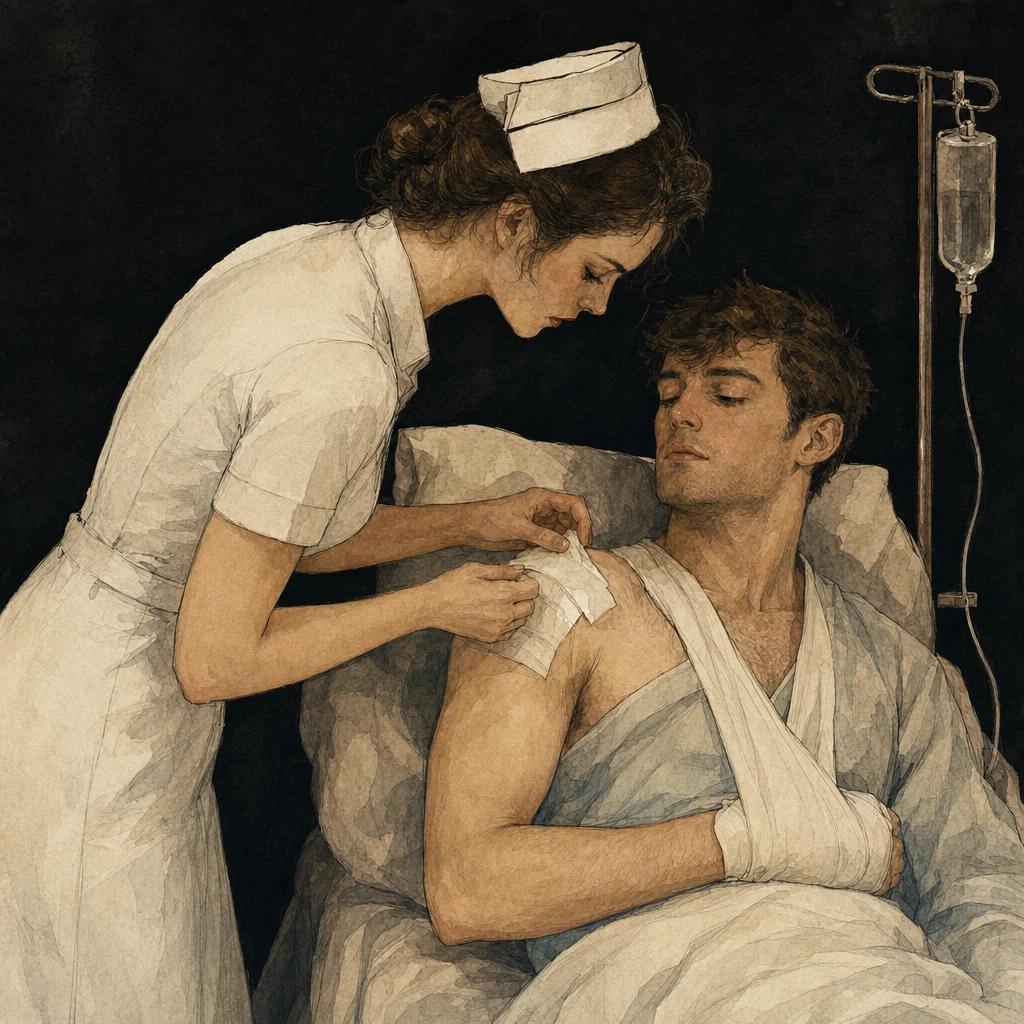
Nurse and Patient has a different energy, often more caregiver-focused, sometimes playing with the “sexy nurse” trope that’s become such a cultural fixture. A nurse scene might be as soft as a bed bath, or as bratty as, “Take the pills or I find the much bigger needle.” It can be tender, teasing, or both. There’s a reason “naughty nurse” costumes are a perennial Halloween favourite. This fantasy has mainstream traction whether people admit it or not.
Medical Student and Exam Subject is a scenario I find particularly interesting for its layered power dynamics. The student needs to practise, the patient is their guinea pig, and there’s often a stern instructor watching and correcting. It naturally lends itself to group scenes (multiple “students” examining one patient) and combines vulnerability with exhibitionism in a way that can be extremely intense. The idea of being practised on, of your body being used as a learning tool, that’s a specific kind of objectification that hits differently from most BDSM scenarios.
Military or Institutional Medical Exams (army induction physicals, prison medical checks, asylum scenarios) tend to emphasise depersonalisation. You’re not a person, you’re a number. You’re being processed. The cold, procedural quality of it can feel thoroughly objectifying, which for some people is exactly the point. If you’ve ever read about those famously invasive military induction physicals, you’ll understand the appeal for anyone who gets off on being stripped of autonomy.

Emergency Medicine and Paramedic scenes tap into rescue fantasy: the heroic first responder who saves you and then... well. This is more theatrical than realistic (please never use actual defibrillators in play, I shouldn’t have to say that but here we are), but the urgency and intensity of emergency medicine translates well to erotic scenarios.
Surgery and Mad Scientist scenes cross into horror-inflected territory. A deranged surgeon, a Frankenstein lab, electrodes and “specimens”: it’s medical kink meets fear play. The “patient” might be awake, or pretending to be unconscious while things are done to them. Theatrical, over the top, and apparently exhilarating for the right people. Not my cup of tea, personally, but I can absolutely see the appeal of the fear element.

Dentist and Patient, yes, really. Lying back in a chair, mouth forced open, completely at someone’s mercy. Some people have specific fetishes for dental tools, mouth gags, and braces. The vulnerability of having your mouth pried open and inspected is a very specific flavour of powerlessness. I can see how that one sneaks up on people.
Medical age play is a more delicate area. This can involve an adult role-playing as a younger person at the doctor, or a nurse tending to an “adult baby” who needs their temperature taken and some “medicine” (which might be anything from an enema to a spanking). These scenarios can stir up deep emotions and sometimes connect to genuine childhood experiences being reworked, so trust and thorough aftercare are absolutely non-negotiable here.
And finally, worth saying: not everyone with medical kink needs a storyline at all. Some people are simply aroused by certain activities or objects. They want to do needle play, or have their partner put them in a cast, or wear medical latex during otherwise “regular” sex. The roles might be loosely implied rather than fully acted out. That’s just as valid. There’s a spectrum from full theatrical production to “put those gloves on and touch me,” and wherever you land on it is fine. Your kink, your rules (within the bounds of consent, obviously).
If you’re looking for inspiration, erotic fiction and porn are full of doctor/nurse fantasies, though bear in mind that porn skips every single safety and negotiation step we’ll discuss below, which is a bit like watching Fast & Furious and thinking you can drive. Online communities and forums are useful too. I came across one forum user who described how he’d always liked “playing doctor” as a child, and now as an adult he adores being a “strict, scrupulous doctor who inflicts a bit of pain and, above all, embarrasses his patient in various ways.” That sense of gleeful embarrassment runs through a lot of medfet, and honestly, I love it. The best kinks always have a sense of play to them.
Nurturing scene, hardcore interrogation, slow clinical examination, quick encounter: you and your partner decide. Don’t wing the outline once you’re already in character.
Beginner-Friendly Medical Kink Ideas
Okay. Say you’re intrigued. More than intrigued. How do you get through the bit where you both nearly crack up?
Usually by admitting it. The first thirty seconds are two adults trying on silly lines and wondering whether they sound deranged. Fine. Keep going. The good news is that medfet has a massive advantage over most other role-play scenarios: the structure is already there. You’re borrowing a script most adults already know: doctor, patient, questions, exam, instructions. You’re not acting; you’re performing a familiar script with a very different ending.
You also don’t need a private clinic, a medical degree, or a budget that would fund a hospital drama. You need a willing partner, some communication, and a bit of imagination.
Set the scene with simple props. You’d be amazed at how little it takes. A box of disposable nitrile gloves costs almost nothing (go nitrile if there’s any chance of latex allergy, check before you play, not after someone’s face swells up), and the moment you snap one on in front of your partner, the headspace shifts. That sound alone does more work than half an hour of set dressing. Trust me on this.
A basic stethoscope (you can buy a real one cheaply online) is another great prop. Listening to someone’s heartbeat is oddly intimate, and you’ll both notice when it starts racing. White sheets over the bed, a small penlight for an “examination torch,” a lab coat or scrubs from a costume shop: cheap and immediately effective. Even just a name tag reading “Dr. ___” and a clipboard with printed “patient forms” signals to both of you that the scene has begun.
You don’t need a full clinic setup. Attitude and a couple of well-chosen props will get you further than an expensive examination table. There’s something about putting on a costume, even a minimal one, that gives you permission to be someone else. I’ve seen this in other areas of BDSM too. The gear isn’t just set dressing; it’s a psychological trigger.
Start with a basic physical exam. This is a wonderful first scene because the structure is built in, and you don’t have to improvise much, and you can take it exactly as far as you both want to go. For a full step-by-step walkthrough, from intake and vital signs through to the intimate exam and a diagnosis, our complete medical fetish guide lays out the whole sequence.
One thing worth carrying with you if your scene builds to a mock gynaecological exam and a speculum: if penetration already hurts in ordinary sex or medical exams, don’t “push through” for the scene; a 2024 gynecology study found dyspareunia was the clearest predictor of poorer sexual quality of life in otherwise asymptomatic women (Baszak-Radomańska et al., 2024).

A scene that goes no further than vital signs and a chest exam can still be intensely erotic if the dynamic is right. You don’t have to escalate to the intimate exam to “do it properly.” There is no properly. Do what feels good and stop when it doesn’t. This is play, not a performance review.