What Is Forniphilia? Human Furniture in BDSM
Forniphilia is a BDSM fetish where a person is used as a piece of furniture. That's it, really. A human being, usually a submissive, poses, kneels, stands, or is bound into position to serve as a functional or decorative object.

A chair. A footstool. A table. A lamp. A coat rack. Whatever you'd find in a living room, someone out there has consensually become one.
What sets it apart from most BDSM play is that it's not primarily about pain or impact. It's about restraint, stillness, power exchange. The person acting as furniture stops answering as a person for a while: no chatting, no shifting around, maybe no name. The dominant might put their feet on them, perch on them, set a light object down, or just enjoy the shape their partner is holding.
And yes, before anyone starts pearl-clutching: this is consensual. The "lamp" or "footstool" is a person who chose the scene and can stop it. When it's done right, forniphilia is built on trust. If someone is going to be your furniture, the fantasy cannot make you careless with their body.
Is Forniphilia the Same as Human Furniture?
Pretty much. "Forniphilia" is the kink label; "human furniture" is what it looks like. Same thing, different packaging.
The word itself comes from blending "furniture" (via the Old French fornir, meaning "to furnish") with the Greek -philia, meaning love or affinity. In kink use, it means making a consenting person into furniture.
In BDSM circles, forniphilia is the more recognisable label. Human furniture is the plain-English version. Objectification play is the wider bucket: pet play, human ashtray scenes, living-doll stuff, and plenty else sits under that. But forniphilia specifically centres on furniture, and it usually involves the person being motionless and silent for extended periods. That's the distinctive feature. You're not performing tricks like a pup or responding to commands. You're being still. You're being nothing. And for the right person, that's everything.
Plenty of D/s relationships use objectifying language, "my toy," "my property," without literally making someone act as a lamp. Forniphilia is the actual, fetishistic practice of consensually turning a person into furniture. If it's a joke or a metaphor, it isn't forniphilia. If someone is actually kneeling in position, heart racing, mind quieting, serving as your footrest while you read your book, that's forniphilia.
Where the Term Comes From
The word was coined by Jeff Gord, a bondage artist and filmmaker who founded House of Gord, a website and community dedicated to extreme bondage and furniture play through the 1990s and 2000s. According to kink history and Wiktionary, Gord came up with the term around 1998 to describe the specific fetish he'd been exploring through his work.
And his work was extreme. House of Gord featured elaborate scenarios: women bound into functional items like lamps with actual wiring and lampshades, bicycle racks, garden sprinklers. Gord saw it as art as much as kink. He described human furniture as "the ultimate in artistic expression", arguing that using a living, breathing person as the medium captured something that static sculpture couldn't. He went so far as to suggest that artists throughout history had been trying to capture femininity in stone and paint, but they were using the wrong materials. Make of that what you will.
It's worth flagging that Gord's approach was firmly male-dominant/female-submissive, and he framed it in terms I find a bit tedious: specifically, that forniphilia was partly about a man's desire to conquer and subdue the "ultimate adversary" (woman) by reducing her to an object. Modern forniphilia isn't bound to a single gender dynamic. Any gender can be the furniture or the user. Plenty of male submissives enjoy being human furniture for dominant women or men, and people of all identities play with these roles. The core is the power exchange and the objectification, not who's got what between their legs.
Why People Are Drawn to Human Furniture Play
From the outside, it can look absurd. Why would "lamp" be a sexy role for anyone? But the appeal runs much deeper than "pretending to be a table."

For many submissives, being used as an object is the ultimate form of letting go. There is no clever response to give, no sexy improvising, no guessing what the next move should be. You just are. The pressure to be an active participant in your own life evaporates. You become a thing, and all you have to do is hold still. For the right person, that's incredibly freeing. Mistress Blunt describes how subs are drawn to having "a clearly defined use" and "permission to enter a meditative trance state". Being treated as "worthless" furniture can, ironically, make a sub feel completely useful and wanted. I get this. I've been in D/s dynamics where a submissive would internally glow at being told they'd done well, that they'd been of service. Being someone's chair for an hour is certainly an act of difficult service, and for the right submissive, that difficulty is the devotion. That also fits the way philosopher Dee Payton describes BDSM scenes as voluntary attempts to overcome unnecessary obstacles: the "point" is not efficient furniture, but the chosen struggle of holding the role.
Then there's the humiliation element. For some, the taboo is the turn-on. Being told "you're nothing but my footrest" hits differently when you have a kink for degradation. The wrongness of it in any other context (being treated like a thing, dehumanised, ignored) is exactly what makes it arousing in a consensual scene. The shame is eroticised, controlled, made safe. If degradation is a no for you, skip it. If it is a yes, agree the exact words and limits before anyone is kneeling on the floor.
The stillness matters too, and I think this is the part that surprises people who haven't experienced the quieter side of BDSM. No phone. No to-do list. No performing. Just breath, posture, and the instruction to stay exactly where you were put. Some subs describe reaching a blissful state where they're freed from their own thoughts and insecurities, existing only as an object. If your mind races with anxiety and overthinking, imagine the relief of purposely becoming mindless, in a way that's mutually understood and safe.
That quieter side shows up in BeMoreKinky's own dominance/submission data too. Kneeling when requested, waiting in position, and being directed into beautiful poses all sit high as D/s interests, especially when they are framed as position and display rather than punishment. That feels important for forniphilia, because the kink is not only "make me worthless." Sometimes it is: put me somewhere, make me beautiful, make me useful, and let me disappear into the shape you chose for me.
From the other side: if you enjoy dominance, there's a particular thrill in having a partner so devoted that they will literally become your furniture. I can command your body to be this table, and you'll do it for me. And for those with a sadistic streak, there's fun in the denial element too. The sub may be right there, turned on and unable to ask for anything, while the top drinks tea like nothing special is happening. Yes, that does something for me. Qualitative research with Dominant-identified BDSM participants found that control and power exchange sat alongside connection, fulfillment, self-expression, safety, consent, and care, which is a useful corrective to the lazy idea that dominance is just cruelty with better lighting.
And then there's the one that surprises people the most: intimacy. It can look cold from outside. Inside a good scene, one person is handing over a ridiculous amount of vulnerability, and the other is quietly tracking them the whole time. The dominant is caring for them throughout, even behind a stern facade. You notice tiny things: breath, a shoulder twitch, how much weight is actually safe. The sub notices every shift too. The unspoken deal is basically, "I trust you to use me" and "I care enough not to misuse that trust." That's pretty romantic, actually. Perverse and romantic at the same time. Welcome to BDSM.
This is also where praise and humiliation part ways. Praise and soft domination tend to be broadly welcomed in D/s spaces: "good table," "beautiful object," "look how perfectly you're holding that for me." Humiliation, degradation, and objectification are more split. Plenty of people want the heat of being reduced to an object; plenty want the posture, service, and display without being verbally crushed. If you treat those as the same kink, you'll miss the point of both.
Common Types of Human Furniture
Human imagination is the only limit here, but certain roles show up again and again.

The human footstool is one of the simplest and most iconic. The sub kneels on hands and knees, or curls into a ball, while the dominant rests their feet on their back. It can involve restraints or none at all, just the stern instruction to stay still and support my feet. Variations include a human ottoman, where the sub lies on their back and the dominant uses their body as a rest, or a face footstool, where the dominant props their feet on the sub's face or head. Significantly more intense and humiliating, that one.
The human chair has the sub positioned so the dominant can sit on them. That might be a squat, a braced kneeling pose, or lying back with knees bent into a kind of seat. Face-sitting sometimes gets folded into this, with the sub's face treated as the chair. I came across a kinky forum conversation where one male sub described building a special setup from a cut-out wheelchair so his Mistress could "sit on and ride my face whenever she wanted." Points for engineering, I suppose. Chairs are tricky because humans aren't exactly built like cushions, but many enjoy the literal weight and pressure of their partner on top of them as a very physical form of domination.
The human table is a classic. Sub on all fours, back parallel to the floor, so items (books, plates, a drink) can be placed on them. Imagine calmly sipping tea off the naked back of a partner who is trying not to move an inch. Tables are all about rigidity and endurance. A wobbly table is no good. This role often involves bondage or at least the firm instruction: don't you dare drop what's on your back.
A human serving tray is a variation on the table. The sub kneels and holds a tray out in front of them, or holds one in their mouth by a bit or handle. Those arms will get tired. Serving-tray play is often about display: presenting drinks or toys on the tray for the dominant to take at their leisure, treating the sub like a useful but ignored pedestal.
Human lamp or coat rack: standing roles. A human lamp might involve the sub standing upright with a lampshade on their head or holding one, possibly with a light attached. A coat rack has the sub standing with arms out like hooks, and the dominant hangs their coat, bag, or hat on them. I love the domestic dominance feel of this: your partner silently holding out their arms for you to hang your coat on, instead of using the actual rack. These roles are physically demanding (arms will start shaking) and the sub usually has to remain expressionless, as if they truly are an object. Some lamps are "turned on" or "off" by a verbal command or a pat on the head. I quite like that.
Human toilet or ashtray is more extreme, and not for everyone. If piss, ash, or body-fluid humiliation is part of the plan, negotiate that separately. Talk consent, hygiene, and limits before anybody is on the floor.
Human bed or sexual furniture is where the "furniture" becomes more directly sexual. A sub might serve as a human mattress, or support the dominant's body during sex with a third party. Objectification layered on objectification. Another option: the sub acts as the support structure another person is tied to, replacing a St. Andrew's Cross. A human being can replace almost any piece of dungeon equipment if you're imaginative enough.
Human decoration doesn't always involve physical service. Sometimes it's purely aesthetic; the sub is posed as a statue or mannequin in the corner, possibly tied in a strict position or simply instructed not to move or speak. They might be draped with decorations, painted, arranged like a living art piece. The thrill is being present but ignored, overhearing conversations as if you truly were a piece of the room. The exhibitionism and voyeurism angles are obvious.
These are the common examples, but people have made human furniture out of almost anything you can dream up. Jeff Gord's photoshoots included human pianos, bookshelves, even a human lawnmower. For beginners, start with the simpler roles: footstool, table, chair, which are physically easier, and get fancy once you understand your limits.
One more thing: human furniture scenes can be done with or without bondage. Restraints add to the helplessness (the sub truly can't move) and can also support limbs that would otherwise tremble with fatigue. But bondage adds complexity and safety concerns. Untied play is a pure obedience test: stay put because I said so, not because the rope said so. It also allows the sub to tap out more easily by simply speaking their safeword. Many couples use a mix; light restraints plus the sub's own effort.
How Forniphilia Can Be Practiced
Practically, the sexy question becomes unsexy fast: where do the knees go, how long is too long, and what counts as stop?
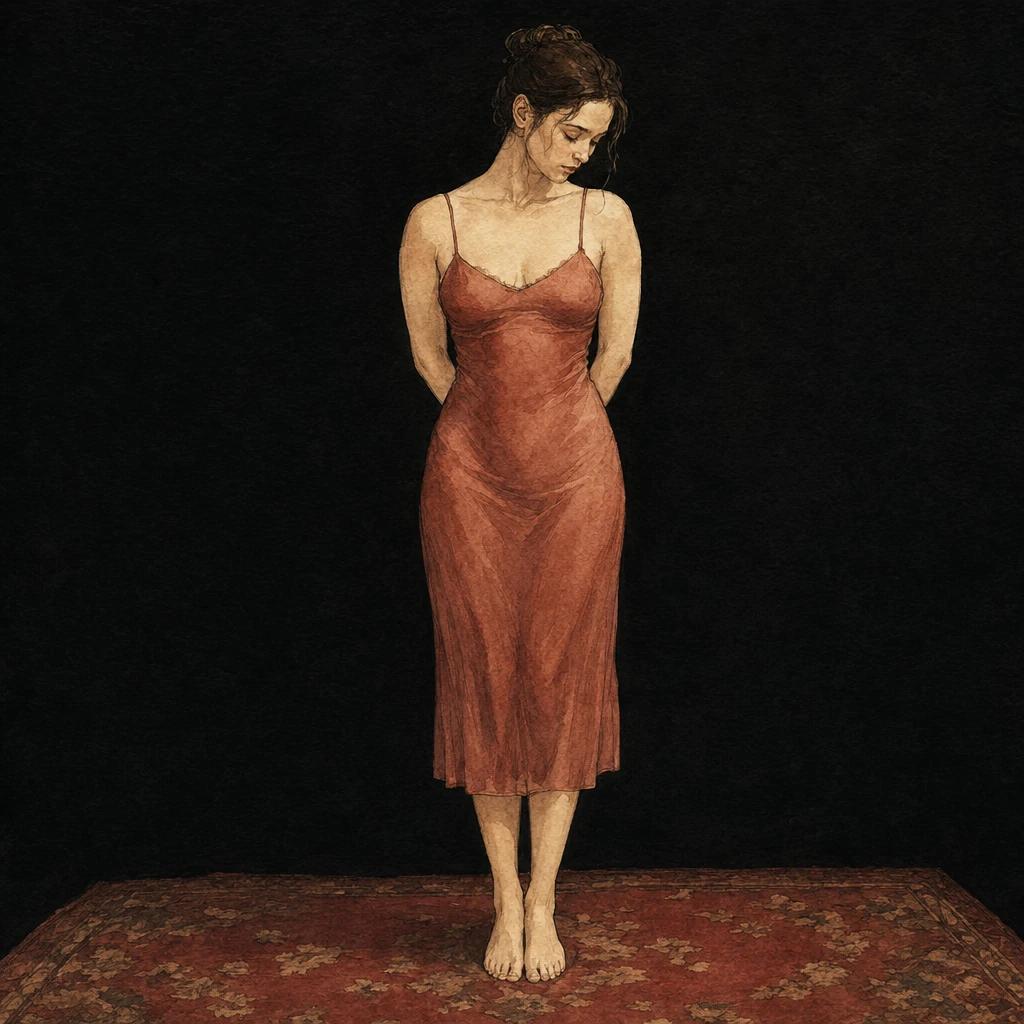
Most scenes are smaller than the fantasy. At home it might be five minutes as a footstool during foreplay. At a fetish party, a dominant might display their human end table in the lounge area for an hour. Some scenes are strict protocol. Some are silly domestic bossiness. Props can help. They are not the point.
Gear is optional, but it changes the flavour. Cuffs or rope can keep a pose honest, and a little rope bondage know-how goes a long way here; bondage tape or plastic wrap moves the scene toward mummification. Straps and harnesses can hold a standing "lamp" in place or attach someone to a frame. A lampshade is silly until it works. A cloth over a human table, a silver tray in someone's hands, a collar clicked on before the role begins: those small details do a lot.
Before anyone becomes an ottoman, you need to talk about limits and expectations. What type of furniture will the sub be, and what will be done to them? Will there be bondage, and how strenuous? What's the expected duration? Will the sub be gagged or silent? If they can't speak, you must establish a non-verbal safeword. How will the dominant check in without breaking character? Are any actions or language off-limits? What aftercare will each person need? Do this before anyone gets into position. Not during. Not after.
Once agreements are in place, the dominant positions the sub and introduces the function: sitting down, putting their feet up, placing objects on them. From here, it's about maintaining the energy. The dominant might enforce the role with reminders ("Furniture doesn't wiggle. Do I need to tighten those ropes?") or indulge in complementary play, lightly teasing the sub's skin, using them as a prop for their own pleasure. One very effective bit is doing something ordinary while they hold position: reading, sipping tea, chatting with a friend. The sub is present but not acknowledged as a person until the dominant decides otherwise.
The submissive's job is to hold the shape. They might float into subspace, or they might spend every second noticing an aching wrist or the warm pressure of a foot. The psychological arousal can be huge even without direct sexual contact. Like a lot of BDSM, so much of it stems from headspace rather than whatever physical stimulation is happening.
Ending the scene deserves attention. The dominant signals the end clearly, removing props, giving a release command: "You may move now." If the scene was intense, the sub might feel disoriented coming back. A caring dominant helps them out of bondage, massages stiff limbs, offers water, uses the sub's name. Often there's an almost giddy moment of we did that, especially if it's a first time.
Some people explore forniphilia alone. Obviously you can't truly be "used" as furniture by yourself, but a person might position themselves in a furniture-like pose, incorporate self-bondage, or mentally roleplay the scenario for their own satisfaction. If you do experiment solo, be extremely careful. Self-bondage can be properly dangerous. If you cannot get out fast, don't do it. Keep shears where your hand can actually reach them.
Consent, Limits, and Safewords
With forniphilia, the extra trouble is obvious: heavy objectification plus bodies stuck in awkward positions. Spell out the scene in plain terms before anyone gets tied. If one person hears "a little objectification" and the other means "wrapped head-to-toe and ignored for an hour," that gap needs closing in advance. A yes/no/maybe list is useful here. For example: feet on back, being called furniture, session up to 30 minutes might all be yes; gagging or being in front of an audience might be maybe; breath play, photos, being stepped on in shoes might be hard no. The top has limits too, and naming them matters.
The non-negotiable safety basics for forniphilia specifically: if the "table" is meant to stay mute, or if a gag is involved, speech is useless for a safeword. Put a signal in their hand. Keys dropped on the floor mean stop. A bell tied to a finger works too. Test it before the scene, not during the panic.
The dominant has extra responsibility here. They can't just assume "no safeword means all is well." Watch the body: colour, temperature, breathing, tears, trembling, tiny changes in posture. This is not a kink where you can zone out, even if the fantasy involves ignoring them.
And a dominant should never assume that because someone is their submissive generally, they can treat them like furniture without asking. Even in high-protocol relationships with broad consent, "still okay for furniture tonight?" is not weakness. It's maintenance, and it sits at the heart of safe BDSM practice.
If you're doing this at a public dungeon or play party, tell the dungeon monitor what is going on. Someone tied and unmoving in a corner can look alarming if you walk in cold. A quick "this is consensual, we have signals, it's all negotiated" can prevent well-meaning interference.
Physical Safety for Human Furniture
Bodies are bad tables. Even simple poses get painful or risky if you hold them too long or set them up badly. The core BDSM safety principles apply, plus several risks that are specific to this kink.

Joints complain first. Knees on wood for twenty minutes? Bad idea. Shoulders cranked behind the back? Also bad. Use padding on hard floors. Keep the spine as neutral as possible if weight will be applied. Never force limbs at weird angles.
Gags are common in forniphilia to enforce silence, but be careful. A gag turns ordinary saliva into a problem if the person can't swallow well. Never use anything that blocks both mouth and nose. Face-down and gagged is not a moment for casual optimism; the head has to turn and the airway has to stay clear. Mark Griffiths flags smothering as a real risk in scenes like this. Use gags for shorter periods and remove them periodically.
If the sub is standing (lamp, coat rack), there's a fainting risk. Locking knees for too long impedes blood flow. The sub should subtly bend their knees occasionally, and the dominant should allow position shifts. If a sub says they feel dizzy or starts wobbling, support them immediately.
Whenever bondage is involved: a finger should fit under rope or cuffs, and purple, cold, or numb extremities mean loosen now. Allow micro-movements periodically.
Time limits matter. Arms tied out as a coat rack: a few minutes at most. A fully mummified human lamp standing: probably not more than 10-15 minutes without a break. An unrestrained kneeling footstool can go longer because the sub can subtly adjust. Injuries take far longer to heal than a scene takes to run.
If the dominant is sitting on the sub or placing heavy objects on them: move onto them gently and support some of your weight with your own legs. Keep hot mugs and candles off bare skin unless you negotiated that risk.
If you're using rope, tape, or ties, safety shears stay within arm's reach.
Never leave a bound person unattended. Plan ahead so everything you need is within reach. A sub left alone while restrained can spiral fast. They gave you their trust. Stay to honour it.
Offer water during longer scenes; holding a straw to the sub's lips can stay in theme while being essential care. End the scene if they are shaking hard, breathing badly, or going cold.
Psychological Safety and Aftercare
The mind is not a side quest here. One minute you're a beloved partner; the next you're being called "it" and ignored like furniture. Hot, yes. Also weird in the gut.
It helps if both partners understand the emotional tone going in. Playful, strict, shame-heavy, devotional? I get more from D/s when I learn the person's exact wiring instead of pasting a generic script onto them.
So ask the specific question, not just the broad one. "Do you want to be objectified?" is useful, but it is not enough. Praised as a beautiful object? Ignored as a useful object? Mocked? Kept in position with almost no words? One person's "you look perfect like this" is another person's "please don't perceive me so kindly; I want to be erased."
If a line suddenly hurts for real, red is valid. Emotional distress counts. Stop, bring them out of bondage, use their name, comfort them. Sometimes a short pause is enough. Sometimes you need to end the scene entirely.
One risk specific to forniphilia: a submissive can carry the objectification out of the scene, especially if low self-esteem is already in the room. Consensual words can still sting later. A sub might find that days later they feel uncertain: why do I get off on being treated like this? Does it mean I really am worthless? I recognise this. Affirmation during aftercare does a lot here: you were amazing, I'm so proud of you, you're so strong for doing that. Use their name. Being held tightly goes a long way after feeling so objectified.
Some people use de-roling rituals. The dominant literally says: "This object is released from service and may become [name] again." They remove a collar, wipe off display makeup. Just as an actor takes off a costume, the sub needs to transition out of character and feel appreciated. The furniture role is a temporary scene role, not a final truth about the person; making that boundary explicit is part of why the come-down can feel so clean.
After everyone's rested, say the obvious thing out loud: you are not actually my lamp; you're my person, and I loved playing that with you. People can crash hours later or the next day. Be gentle with that. If the scene kicked up something bigger, a kink-aware therapist can be useful.
Forniphilia involves pretending someone is less than human. If a couple does this regularly, it's important that the objectification stays within the fantasy. If a sub ever starts to feel like their partner actually views them as an object outside of play, that needs addressing urgently. The scenes are a fantasy bubble, not a new reality.
Beginner-Friendly Ways to Explore the Kink
Start small if this has your attention. Skip the three-hour immobility fantasy on the first attempt. Try five minutes as a footstool while your partner sits on the couch. The sub kneels, the dominant gently rests their feet on their back. See how it feels. If it excites you both, build from there. If it's awkward, talk about what felt weird. Maybe the sub needed more dominant instruction to get into the headspace. Maybe the dominant felt silly. Good data.
It might feel ridiculous at first. You might think, I can't seriously call my partner a coffee table. To ease the self-consciousness, set the scene together. Props help, even something as simple as the sub stripping naked, or the dominant picking up a riding crop. These signal that it's play time and free you from feeling like your everyday self. If you feel silly, acknowledge it briefly and push through. The initial awkwardness often gives way to something very hot once you both commit to the fantasy.
Communicate before, during, and after. As beginners, you'll do a lot of talking beforehand, and that's not killing the mood. It's building it. During the scene, allow some communication at first. The dominant can quietly ask "colour?" and the sub can respond. Later you may get quieter, but early on, pause to fix the cuff, check the knees, or ask whether five more minutes still feels good.
And use safewords liberally. New kink rule: stop a little early rather than a little late. A safeword is the brakes doing their job. When a dominant responds cleanly, the sub learns that stopping will be respected next time too.
Forniphilia isn't going to be for everyone. Some people will read this and think absolutely not, and fair enough. But if the pull is there (stillness, surrender, usefulness, the charge of someone becoming furniture for you), it can be worth exploring. Go carefully. Keep consent boringly clear. And keep your sense of humour, because yes, on some level, you are turning a human into a lamp. Ridiculous. Hot. Weirdly intimate.