What Is a Gorean Slave? Kajira Roles and Gor Subculture
There's a corner of the kink world that doesn't just borrow a few ideas from fiction; it tries to live inside a novel. John Norman's Gor books, a sprawling science-fantasy series spanning 30+ volumes, created an entire planet where Master/slave dynamics aren't negotiated scenes or weekend play; they're the fabric of society. Swords, cities, chains, and kajirae (the Gorean word for slave girls), all part of daily life on this fictional Counter-Earth.
And here's what fascinates me: people read these books and thought, yes, I want that. Not as wank material (well, not only that), but as something to live. The result is a subculture that's been thriving since the 1980s, controversial as hell, and unlike anything else in BDSM, even if some Goreans would insist they aren't part of BDSM at all.
The Short Definition of a Gorean Slave
A Gorean slave is a person who submits to ownership in the style of John Norman's Gor universe.
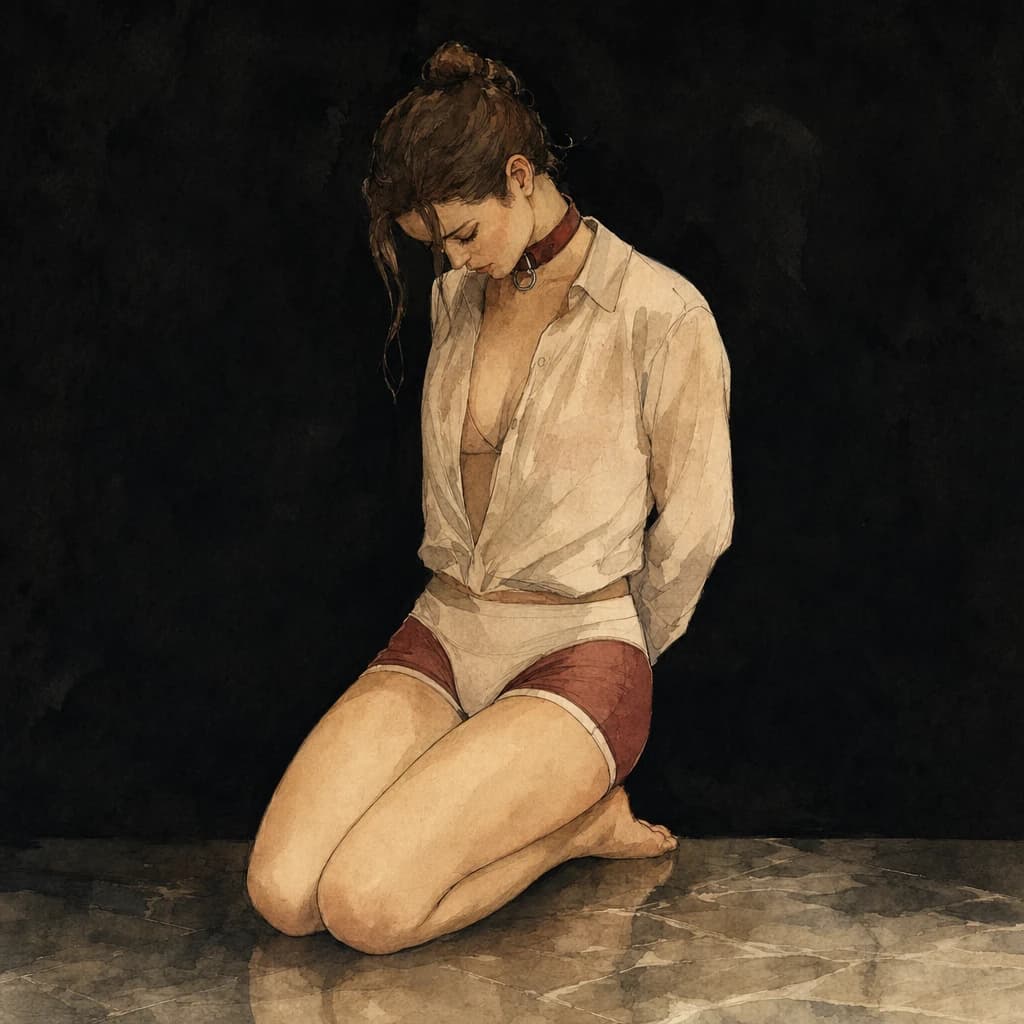
In the books, that usually means a kajira, a woman in a collar, ordered around by a Master, useful in the kitchen and available in bed, with obedience treated as her whole job. Her Master's word is law. Full stop.
In the real world, a "Gorean slave" is usually a woman borrowing that role by choice, because the books put women at the centre of it. That might mean online roleplay, one live-action scene, or a day-in-day-out 24/7 lifestyle arrangement. The break point from the novels is simple: a real-life Gorean slave chooses this. It's a form of consensual total power exchange, not literal ownership under any law, but a very specific flavour of the M/s dynamic that's soaked in Gor's particular lore and aesthetics. She (or more rarely, he) strives to embody the idealised submission from the books, often taking on specific rituals and language from the saga.
Where the Term Comes From: John Norman's Gor Series
The whole thing traces back to a long-running sword-and-planet novel series by John Norman (pen name of philosophy professor John Lange). The first book, Tarnsman of Gor, landed in 1966: think John Carter of Mars with more chains and lengthy lectures about gender. What starts as pulp adventure quickly becomes a vehicle for Norman's personal philosophy about nature, power, and sex. By the later books, there's far less monster-fighting and far more men mastering women, described as naturally fulfilled through submission.
In Norman's world, slavery is a central institution. Societies on Gor are fiercely hierarchical: men occupy roles as warriors, rulers, or artisans, while women are cast as either Free Women (who have rights but are expected to be modest and deferential) or enslaved kajirae (who have no rights at all, only the duty to serve). The author uses Gor's setting to explore (or, let's be honest, preach) his ideas on "natural order." In his view, dominance and submission are biologically ingrained: men as strong protectors/masters, women as desire-driven creatures who find happiness in slavery. Every few pages, someone launches into a monologue about how women secretly yearn to kneel before a powerful man.
I'll be upfront: as someone who sits firmly on the dominant side of the power exchange equation, reading Norman's philosophising about how all women are naturally submissive makes my eye twitch. Still, the subculture grew out of the parts that make me wince, not around them.
By book 11, Slave Girl of Gor (1977), the M/s material had taken over. It follows Judy Thornton, an Earth woman transported to Gor, captured, trained as a slave, and systematically stripped of her independent identity. The book makes no bones about it: on Gor, Judy's feminist ideals from Earth are systematically annihilated. At one point she insists on her right to choose sexual partners, only to be laughed at by a barbarian who essentially tells her he'll do what he wants. "Might makes right" as sexual politics. To say these books are controversial is putting it mildly.
Norman's writing style is famously repetitive and heavy on philosophical exposition. One pulp reviewer quipped that John Norman doesn't so much write as "vomit his id directly onto the page". He's been described as "an odd man… a Nietzschean at heart" whose fiction showcases "the Way Things Ought to Be" according to his worldview. Strip it down and Norman is saying this: strong men should own adoring, submissive women. Plenty of readers call that misogyny. Fans tend to call it erotic honesty. Either way, the words and images stuck. People copied them into real life.
The extremity of that fantasy, an entire civilisation built on dominance, got under the skin of a certain type of reader. By the late 1970s and 80s, those readers started forming communities, trading fanzines, meeting up to discuss living as "Goreans." When the novels went out of print for a time (partly due to feminist backlash) and found new life online, the subculture exploded.
Kajira, Master, and Gorean Speech
Gor has jargon, and Goreans take the jargon seriously. You can muddle through without the vocabulary, sure. You will miss half the charge.
First word: kajira (plural kajirae). It's the Gorean word for a female slave, from a constructed language Norman peppers throughout the books. Pronounced roughly "KAH-jeer-ah." In the novels, kajirae frequently refer to themselves in third person, "this girl" instead of "I", as a sign of utter humility. Norman also gives slaves the kef, a stylised K-ish brand burned into skin in the novels. In real life it turns up as pendants, tattoos, or a tiny symbol tucked into someone's profile, where it quietly says: kajira.
Kajirus is the male equivalent. But male slaves are rare in the storyline (usually depicted as disgraced enemies or men of weak character, surprise, surprise). Norman's fiction centres female submission. Full stop. So while kajirus exists in the vocabulary, kajira is the term that carries real cultural weight. In real-life Gorean circles too, the subculture is predominantly built around male Dominants and female submissives, which tracks with Norman's original emphasis.
Master and slave are used constantly, often capitalised. In stricter Gorean spaces, the rule can be blunt: free men get "Master," free women get "Mistress." Within her specific dynamic, she'll use "my Master" or his chosen name/title. Part of the immersive appeal is speaking as though one truly were a slave in that world, so modern terms like "boyfriend" or "Sir" get eschewed in favour of Gorean language. There's a famously florid phrase: "La kajira", meaning "I am a slave girl." Some community members use it almost like a mantra. A declaration of identity.
Beyond titles, Gorean slaves have a whole repertoire of ritualised speech and gestures. A kajira might ask permission to speak: "Tal, Master, may this girl speak?" She might use third person throughout: "This girl begs to serve Master." These stylised behaviours come straight from Norman's writing and they do something to your head; both people end up somewhere else entirely, in this high-protocol, quasi-medieval headspace. It's theatrical and erotic at once. Method acting for your D/s dynamic, where even the vocabulary itself deepens the power exchange.
Then there are the slave positions and commands: words like Nadu, Bara, and Tower that refer to specific kneeling or lying postures a kajira is trained to assume on command. "Nadu!" from a Master sends a trained kajira gracefully to her knees, thighs spread wide, hands on thighs, back arched, the position of an obedient pleasure slave ready to be inspected or used. There are dozens of such positions described in the books. Likewise, certain commands (like "Serve me wine," which in lore involves a whole choreographed ritual of fetching and presenting a drink) form a shared script both parties can follow.
All this special language is what differentiates Gorean play from a more generic BDSM scenario. Plenty of Dominants can say "Kneel, slave" and get a reaction. A Gorean Master says "Nadu, kajira," and the command carries homework: the posture, the script, the whole Gorean headspace. It feels less like putting on a role and more like stepping into their private country.
This is also where fantasy lore and ordinary high-protocol interest overlap without being the same thing. BeMoreKinky's first-party aggregate data shows broad appetite for formal-role cues: kneeling when requested, being guided into a comfortable kneel, greeting a dominant in a prescribed style, using honorifics, and even being called "slave" all sit in the same protocol-and-position cluster. That does not mean those people are Gorean, or that the data measures Gorean identity. It means the building blocks Gor dramatizes (posture, title, ritual greeting, formal obedience) already have erotic charge for plenty of D/s people before you add Norman's fictional language on top.
Set the philosophy aside for a second: language changes headspace. I've experienced it in D/s dynamics. The right word at the right moment can drop someone deeper into submission than any piece of equipment ever could. A specific phrase that's been loaded with meaning between two people? That's where the real power lives. The Gorean vocabulary just formalises that into an entire linguistic system, and I can respect the thinking behind it even when the ideology it's wrapped in makes me bristle.
Fictional Gor vs. Gorean Lifestyle vs. Online Roleplay
There are three different arenas where "Gorean slaves" exist, and they operate very differently:
1. Fictional Gor (in the books): entirely make-believe. Slavery is non-consensual, women are routinely captured and owned, and Earth's laws don't apply. In the novels, a Gorean slave is property. She cannot say no. Her Master can do anything to her with impunity. That's the baseline in the books: hot for some readers, grim for others, and safely fictional.
2. The Real-Life Gorean Lifestyle: people taking the master/slave ethos of Gor into actual relationships, voluntarily. Here, a "Gorean slave" is a consenting adult who chooses to live under the authority of a self-described Gorean Master. This is Total Power Exchange (TPE), often 24/7. The difference from the books: consent and boundaries. Real people can't be owned, whatever the collar says, so lifestylers build rules, trust, and exit doors around an imitation of the books. That practical layer matters: contemporary consent scholarship treats negotiation, safewords, aftercare, and ongoing cues as the machinery that separates consensual BDSM from coercion, especially when the scene is built around pretending consent has disappeared.
3. Online Roleplay and Fandom: Gor also has a long life on screens: chat rooms, forums, IRC back in the day, Second Life later. A person can spend an evening as a kajira, serve in a virtual tavern, get sold in a fake auction, shut the laptop, and go make tea. For some, it's erotic improv. For others, it's community with costumes and rules. Plenty drift between the two.
Why does the distinction matter? Because consent changes shape in each version. Book-Gor has none. Lifestyle Gor has consent underneath the performance, even when the couple talks as if the slave has no choice. Online Gor usually handles consent out of character, then lets the characters play capture, sale, punishment, whatever has been agreed. The Gorean community just takes it further than most, making the non-consent illusion so immersive that it becomes a whole world.
The Gorean community itself often splits along these lines. On one side: the lifestylers or literalists, who actually try to live by Gorean ideals daily (short of anything illegal). They'll say, "I am Gorean, this is not a game to me." They incorporate Norman's philosophy into real relationships, sometimes entirely offline, behind closed doors, a man and woman living as Master and kajira full-time. These folks emphasise the philosophy (honour, order, "natural" gender roles) and often distance themselves from mainstream BDSM. Some argue that Gor is not a subset of BDSM at all; in their view, BDSM is about consensual role-playing, whereas Goreans believe they're living a "natural" dynamic. (Most outside observers, myself included, would still classify Gorean practices under the broad BDSM umbrella, just with a heavy fantasy flavour. But I understand why they resist the categorisation.)
On the other side: the role-players, who call themselves Gorean but treat it as interactive fiction or a kink scenario rather than a personal identity. These are the people in Gor-themed chat rooms or hosting Gorean dinners in Second Life. Character names, Old Gorean speech, in-character behaviour for the duration of a scene, but they don't necessarily carry it into their real-name, real-world relationships. For them, Gor is a place to play. If it goes sideways, they can break character, talk like adults, and reset. Safewords exist for a reason.
The boundary still gets muddy. Someone can begin as a kajira on a forum, realise the feeling is not just a game, and go looking for a real Master. Some hardcore lifestylers also hop online for community events. There's tension between these groups sometimes: the "serious" Goreans may scorn the gamers as not understanding the depth of the philosophy, while casual role-players might view die-hard lifestylers as extreme or cultish. They share the same label, then argue endlessly over whether Gor is a game, an identity, or a household religion with better costumes.
The practical difference is not subtle: in the real world, a Gorean Master cannot abduct a woman and declare her his slave. That's a crime, not consensual kink. A lifestyle Gorean slave must voluntarily enter into her status with a trusted partner. In an online Gor chat, though, people regularly roleplay abduction scenarios, capture fantasies, slave auctions, because everyone at the keyboard has agreed to pretend.
(Internet history footnote: Gorean spaces first took off on 1990s chat boards, and some of the demographics were odd. Reports emerged of teenage boys roleplaying powerful Masters behind anonymous screens, "collaring" middle-aged female submissives in chat rooms. This drew disdain from both feminists who saw women potentially being exploited by fantasy, and the mainstream BDSM community who worried these online Goreans weren't educating themselves on real-life consent and safety. A vivid example of how fictional roles can collide messily with real emotions and real vulnerabilities.)
What the Gorean Lifestyle Philosophy Emphasises (Beyond the Kink)
If you're expecting nothing but smut, the lifestyle essays go somewhere else first.
According to one of the most referenced lifestyle essays on the subject (written by Gorean Master Azrael Phoenix), a true Gorean slave is defined by her internal devotion and adherence to Gorean philosophy, not by wearing a collar or performing rituals. Collars and chains are props; the real claim is identity.
The essay's key argument: Gorean slavery, in the real world, is based on consensual but absolute submission. Unlike mainstream BDSM circles where relationships often involve extensive negotiation, defined limits, and sometimes formal contracts, the Gorean ideal is that a kajira eventually surrenders entirely to her Master. However, and this is the important bit, this total surrender happens gradually and must be built on trust and consent. Even though a Gorean slave gives up all her power within the relationship, she can only do so by choosing to enter that relationship in the first place. As the essay puts it: "although absolute, slavery must always be consensual!"
The paradox of consensual slavery is acknowledged openly. It's extreme power exchange, but still ultimately voluntary. I respect this honesty. It would be easy for Goreans to pretend the consent question doesn't exist, to fully buy into the fiction that their slaves have no choice. The better Gorean writers don't dodge the paradox. I may disagree with where they land, but at least they're willing to sit with the awkward part.
The essay is also ruthless about the difference between role-playing a part-time slave and truly being a slave as part of your identity. In Gorean relationships, they insist, "the 'role' you have is part of who you are, not something you occasionally act". A Gorean kajira is expected to behave as a slave at all times, 24/7, not just during bedroom scenes or weekend play parties. This is why many Gorean lifestylers don't consider themselves part of the BDSM "scene" world. To them, it's holistic. The essay contrasts this with kink dynamics that might be time-limited or vary from couple to couple. Gorean slavery, they argue, is more uniform and all-encompassing: "an inherently total relationship" rather than a spectrum of intensity. If a part of a Gorean slave's life isn't under her Master's direct control, it's not because she's an equal partner in that area, it's because he chooses not to micromanage it. Research on BDSM dimensions backs the distinction here: some practitioners explicitly describe BDSM as a full relationship structure and lifestyle, not merely something that happens in bed, with benefits clustered around personal growth, interpersonal safety, intimacy, and community.
Another emphasis: so-called "natural order" and individual responsibility. Goreans speak of living honourably, with discipline, and what they call gender complementarity. For Masters, this means being worthy of the power they hold. For slaves, it means striving to be fully pleasing, and not just in the bedroom: grace in how you move, attentiveness in how you serve, and a kind of spiritual joy in surrender itself.
Here's something that might surprise people: some Gorean lifestyle folks don't engage heavily in what mainstream BDSM would call sadomasochism. They might not be tying each other up or doing impact play at all. Some live simply as an M/s couple where the woman obeys and serves, perhaps wears a token of bondage at home, but there's no dungeon equipment in sight. The focus is often on authority and service, not fetish implements. As the essay notes, there's overlap with BDSM activities, but "one does not imply the other"; someone could practice a Gorean Master/slave lifestyle without whips and chains, or do bondage and SM but not be Gorean in philosophy. I find this interesting, actually: it challenges the assumption that all M/s dynamics must involve pain or equipment. Sometimes the power exchange itself is the kink. Sometimes it's all about obedience and structure. No flogger required.
The Gorean philosophic stance, stripped to its core: Men and women, by nature, have different roles. A man assumes responsibility as leader. A woman finds freedom in yielding all control to him. They'd say it's mutual fulfilment, not oppression.
Now, I want to be honest. I find the philosophy quite rigid, and the insistence on gendered roles doesn't match reality for a lot of us. I know from personal experience that dominance has nothing to do with gender; it's an orientation, a part of who you are, not something dictated by your anatomy. Not all women want to serve men. Not all men want to dominate. People beyond the gender binary or in same-sex dynamics don't fit Norman's model at all. The philosophy works for those it works for, and that's absolutely their right, your kink is not my kink, and all that. But it shouldn't be mistaken for universal truth about human nature, no matter how confidently the books or the lifestyle essays state it. A recent scale-development paper makes the same point from another angle: kink is better measured across desire, practice, identity, community, paraphernalia, and communication than treated as a single gendered script.
That said, I can see what draws people in. The erotic power of feeling completely "claimed" by a partner is real: some submissives crave that level of structure and purpose, and a Master/slave framework gives them exactly that. The Gorean approach just dials the impulse up as far as it can go, wrapping it in elaborate customs and a guiding philosophy until it becomes your life. For the right person, I imagine that's bloody addictive.
The essay also pushes back against the idea that a consenting person cannot give up all their rights without it being abuse, calling such claims "ignorant bigotry". This is the same argument you hear across the BDSM community about TPE relationships: plenty of educators have defended the idea that a person can sanely and ethically agree to give up decision-making power to a dominant partner, so long as trust and perhaps an ultimate "out" exist. Controversial in the vanilla world, obviously, but within these communities it's seen as the deepest expression of consensual kink. And frankly, I agree that outsiders don't get to tell consenting adults that their relationship is inherently abusive simply because it looks extreme from the outside.
The blog author goes further, explicitly stating that any attempt to force someone into slavery or abduct them is completely against Gorean principles; in reality, that's criminal and "has nothing to do with Gorean Philosophy." They distance themselves firmly from anyone who would try to literally enslave an unwilling person, calling such people mentally unsound and not true Goreans. The reputable lifestylers reject non-consent completely: if it's not consensual, it's not Gorean (in the lifestyle sense). As it should be.
Common Gorean Slave Customs: Positions, Commands, Attire, and Training
Right, onto the bits people usually picture first: the kneeling, the silks, the commands, the stiff little protocols. Some of it is roleplay garnish. Some of it is the whole point, depending on who you ask. The Gorean subculture is famous (infamous?) for its detailed choreography of slave behaviour. Most of these customs are lifted directly from the pages of the novels.
Slave Positions
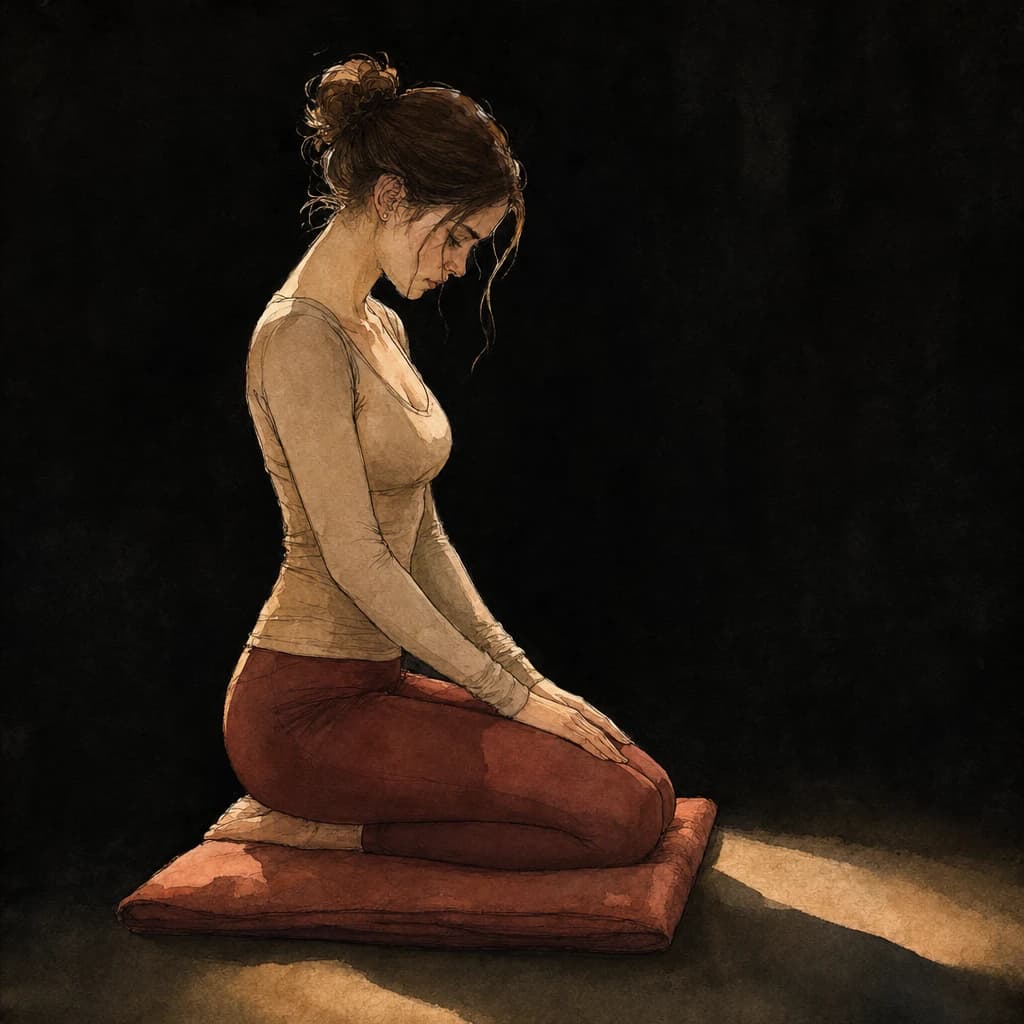
Gorean slaves are trained to adopt specific positions on command, each with a Gorean name (Nadu, Tower, Bara, Obeisance), plus named poses for begging, awaiting punishment, or display. A Master might say "Assume Nadu" and later "Bara, kajira!" and the kajira is expected to transition smoothly: no hesitation, no clumsiness. These positions are practised repeatedly in training until a slave can flow into them without conscious thought. It's practical in the fiction (quick immobilisation or inspection), but it's also beautiful; the body physically demonstrating submission.
Learning them is considered basic education for any new kajira, and our Gorean slave training guide walks through each pose in detail. There's a real thrill for enthusiasts in mastering these bodily rituals; it's almost like a kinky yoga, each pose with a specific purpose and feel.
Master Vadim's Kajira Handbook makes the point that First Obeisance isn't merely a physical act: the kajira is "essentially exposing her neck and back to her Master in this vulnerable position," engaging what Vadim calls predator/prey behaviour, with the slave filling the role of prey. He notes that many Masters will slowly circle a prone kajira to let that exposure register psychologically, not just physically. Reading that framing shifted something for me: it names exactly why these positions land so differently from simply saying "kneel." The body is enacting a biological grammar of submission, and the mind follows.
I'll be honest, I can see the appeal. Using your body as an expression of your internal submission, that's not just a Gorean thing, it translates to D/s more broadly. In any power exchange dynamic, the moment a submissive physically shows their headspace rather than merely saying they're in it? That hits differently. Your body doesn't lie the way words can. The Gorean system just codifies this into an entire vocabulary of positions, and I quite like that idea, even if it's not my particular cup of tea.
Verbal Commands and Recitations
Just as important as the physical positions are the verbal scripts. A Gorean slave has expected ways to ask for things and respond. If she needs to speak to her Master, she might be required to say: "Tal, Master. This girl begs permission to speak." Only after he grants it would she continue. When serving drinks, there's a whole ceremonial language: the kajira kneels, gracefully pours wine, offers the cup with phrases like "Master, may it please you to drink."
Third-person speech is common; many Gorean Masters prefer their slaves to say "this girl" or "[Master's name]'s slave" rather than "I" or "me." For example: "Does Master wish his girl to dance for him?" instead of "Should I dance for you?" It's a psychological tool: helps the slave distance from ego, hammers home that "I am property" mindset. Some slaves only speak in third person when deep in "slave mode," otherwise using normal speech if given permission; it depends on the couple's style.
Gorean slaves are also frequently taught passages from the books as affirmations or demonstrations of training. Rote responses mimic the training depicted in the novels, where girls in slave pens are taught how to respond to Masters or beg for mercy in specific prescribed ways. It's a form of erotic play on conditioning fantasy and a practical way to ensure a shared script for scenes.
Attire and Appearance
Visually, Gorean slaves are known for minimal, sexual attire. In the stories, kajirae are typically naked or barely clothed. Common garments include:
- The camisk: basically a slit rectangle of cloth, belted enough to stay on and not much more.
- Slave silks: sheer drapes, pretty in theory, useless at hiding anything.
The colour of silks carries meaning: white silk kajira is often taken to mean virgin or recently enslaved (unclaimed), while red silk indicates sexually trained or used. Some online communities use these terms for personas, advertising whether a character is "open to erotic roleplay" as red-silk.
Collars are perhaps the ultimate symbol. In the books, these are sturdy metal rings, often inscribed with the owner's name and locked onto the slave's neck. In real life, Gorean lifestylers may use actual lockable metal collars, or leather, depending on preference. Many couples have personalised collars, possibly engraved with a Gorean name or phrase. Wearing a collar 24/7, even discreetly in public as a locked necklace that looks vanilla to outsiders, can be a way for lifestyle slaves to feel their submission constantly. Anyone who's ever worn (or had a partner wear) a day collar will know the quiet thrill of carrying that visible-yet-secret symbol of your dynamic out into the world where no one else knows what it means. That discretion is not just coyness; a 2026 Belgian survey found people with non-normative sexual relationships still reported stigma, and concealable identities can carry anticipated-stigma stress precisely because you are always deciding who gets to know. The Gorean version is the same impulse, just more explicit in its origins.
Beautification and body modification also feature. Gorean slaves in the novels have pierced ears (a sign of degradation in Gor's society), are kept clean-shaven, well-oiled, perfumed, sometimes decorated with cosmetics, all to please the gaze of their Masters. In reality, many Gorean Masters take pride in "presenting" their kajira beautifully: requiring specific makeup, fitness routines, revealing clothing at home. Some use tokens like ankle bells, a playful adornment from the books so that a slave's movements make a soft jingle.
And then there's the extreme end: branding: literally searing the kef mark onto the slave's skin (thigh or lower abdomen typically in lore). A handful of very committed lifestyle Goreans have actually gotten brand tattoos or scarification in that shape. Most don't go that far; it's certainly not required, but it demonstrates how deeply some internalise the fantasy. The permanence of it says something. This isn't a phase for these people.
Training and Education
A Gorean slave isn't left to figure things out alone. There's an expectation of training, both in the fiction (handled by professional Slavers who teach everything from serving drinks to understanding Gorean law) and in the subculture. Some Masters write training programmes, have their slave practise positions daily, memorise quotes, learn specific skills.
Slave dance is a thing: in several books, kajirae perform erotic dances for their Masters, sometimes slow and seductive, sometimes frenzied, usually ending with the girl at her Master's feet. Some fans have fun with this by learning belly dancing or pole dancing to incorporate as Gorean dance. In Second Life Gorean communities, dance competitions and exhibitions were (and may still be) popular.
A Gorean kajira is also expected to learn how to behave in different scenarios: serving in a tavern (there are roleplay taverns online where slaves act as barmaids serving paga, a Gorean ale), walking gracefully, and even deliberate performance: acting timid and afraid if it pleases a Master, or acting proud and then being "broken." The training blends physical tasks with psychological conditioning.
What I find most interesting is how submissives in this community describe the experience. Being ordered to kneel, to hold a position, to push past self-consciousness into meditative obedience; many describe it as freedom through discipline. Dawn Williams, writing from her own long-term M/s life in Living M/s, put it plainly: "we slaves find our power by surrendering it to a Master." That's not a Gorean book; it's a practical guide to real-world M/s, but the line lands directly on what Gorean kajirae are describing when they talk about slave space. The mechanism is the same whether you call it submission or service or slavery: relinquishing control to the right person doesn't feel like loss. It feels like release. By focusing on protocols and positions, a slave can enter a mental space where everything else melts away except the desire to please. That state, sometimes called slave space, analogous to "subspace" in broader BDSM, is real, and anyone who's been involved in power exchange will recognise it, even if the packaging looks different. In interviews with BDSM practitioners, Kim and colleagues found this wasn't just erotic intensity: participants linked BDSM structures like negotiation, safewords, and aftercare to emotion regulation, confidence, intimacy, and feeling safe enough to explore.
To an outsider, some of it might look like pure objectification (and objectification is part of the fetish: Gorean slaves can be treated as living furniture in some scenes, kneeling to hold a tray like a human table), the same impulse that drives purpose-built BDSM furniture. But from the inside, mastering a complex serving routine or holding an uncomfortable position purely because her Master commanded it can feel like an achievement. Done consensually, it's as exhilarating as it is demanding.
Not every Gorean-identified person does all of the above, obviously. Some skip the fancy language but keep the hierarchical roles. Others wear normal clothes but call their partner Master and obey him regarding finances or household decisions. There's a range. But the stereotypical Gorean slave, kneeling gracefully in silk, eyes downcast, awaiting her Master's next command, does exist in many households and is very much prevalent in online roleplaying scenes. It's the style that sets this apart from a generic M/s relationship.
How Slavers Train Kajirae in Gor Lore
It helps to understand how slavery is structured on Gor in the books, particularly the role of Slavers and the process of training a captive.
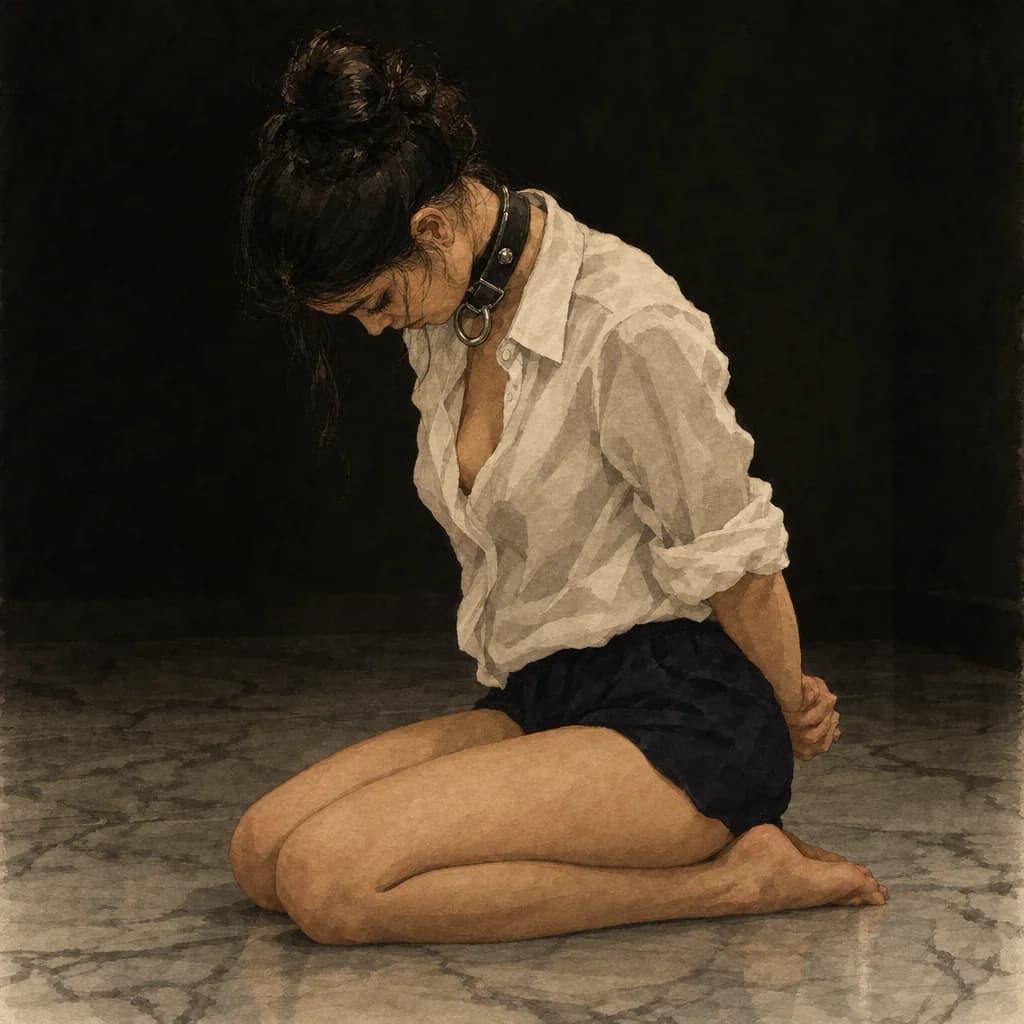
Norman built an entire Slaver Caste into this world, part of the larger Merchant caste, whose business is buying, training, and selling human chattel. These Slavers are connoisseurs of flesh, basically: they know every technique to turn a free woman (often kidnapped or sentenced to slavery) into an obedient, alluring kajira ready for market.
In Gor's cities, you'll find slave houses or training pens, essentially auction houses. A captured girl is brought in, assessed, given a slave name (her old name discarded, symbolising loss of former identity). She's collared and possibly branded early on. Norman's books relish the drama of a proud free woman trembling as the hot-iron kef is pressed into her thigh, marking her permanently. Then comes intense training: kept naked or in training garb, fed just enough, put through lessons in cosmetics, deportment (walking with a proper sway, kneeling smoothly), and sexual arts.
Slavers use tools both psychological and physical. The "lesson collar" is a punishment device with spikes that can be tightened if a girl moves incorrectly. The "slave whip" is five-stranded, used to chastise disobedience. A technique called the "Whip of the Furs" involves alternating between beating and gentle sexual stimulation, classical conditioning to make the slave's body responsive and compliant. Slaves might be kept in a "stimulation cage", teased through the bars until begging for use, theoretically encouraging them to be more lustful and submissive. It's dramatic and entirely non-consensual within the narrative, firmly fantasy territory, obviously.
Education is also part of the process. A Gorean slave is taught cultural rules: never to look a free person in the eyes without permission, how to address different ranks, the positions described above, how to play instruments or dance if destined to be a high-end pleasure slave. The goal: she thinks of herself as a slave completely; the books use phrases like "she was fully slave" when the psychological transformation is deemed complete.
Norman's world acknowledges variety among slaves too. Not all are pleasure slaves serving wine in silks. Some are work slaves (field or mine slaves, usually male). Among females, there are "Kettle and mat" girls (low-level house slaves doing chores and providing casual sexual service), elite passion slaves trained in sophisticated erotic arts for wealthy owners, and exotic slaves bred or trained for unusual traits. There are flesh traders who specialise in particular niches. Say what you will about the man's politics, Norman did build a thorough world.
The Slaver's caste comes with its own stereotype in the books: cunning, educated, good at reading people. They set prices for slaves at market, varying wildly based on beauty, virginity, training, how unusual the slave is. Norman uses currencies like copper, silver, and gold tarsks: a cheap village girl might sell for a few silver tarsks, a highly trained pleasure slave from a major city for multiple gold tarsks. It hammers home that slaves are commodities with a price tag. "How much would you fetch?" is a recurring taunt in the books, meant to simultaneously belittle and thrill. You can see how this translates into roleplay that certain submissives would find devastatingly hot: the objectification, the reduction to a price tag. The humiliation mixed with a twisted pride in being valued.
One scenario the books explore is when a trained kajira is sold to a new Master: how she must adapt quickly to different preferences. Perhaps she was taught in Ar (a major city) to speak softly and serve black wine with precise ceremony, but her new Master is a rugged tribesman with entirely different expectations. The adaptation itself becomes part of the erotic narrative; the kajira's training is never truly complete.
This mirrors something I think is true of all D/s relationships, Gorean or otherwise: no two dynamics are ever quite the same, even when they use the same vocabulary. Each pairing brings out different things in both people. A submissive who was one thing for one Dominant will necessarily be something else for another, and that process of discovery, that adaptation, is part of why power exchange never gets stale for those of us who live it. The Gorean novels just make that subtext explicit.