What Is BDSM?
BDSM groups together interests in restraint, giving up or taking control, and pain for pleasure. Think of a couple agreeing that one will give instructions, or someone asking a partner to tie them up. Both fit, though they involve different parts of the acronym. Consent is essential. Everybody taking part must choose it freely and be able to stop.
You might only want the cuffs. You might love following instructions and want nothing painful, thank you very much. There's room for either preference. You'll get more from asking a partner what they like than from assuming their answer to "BDSM?" covers the lot.
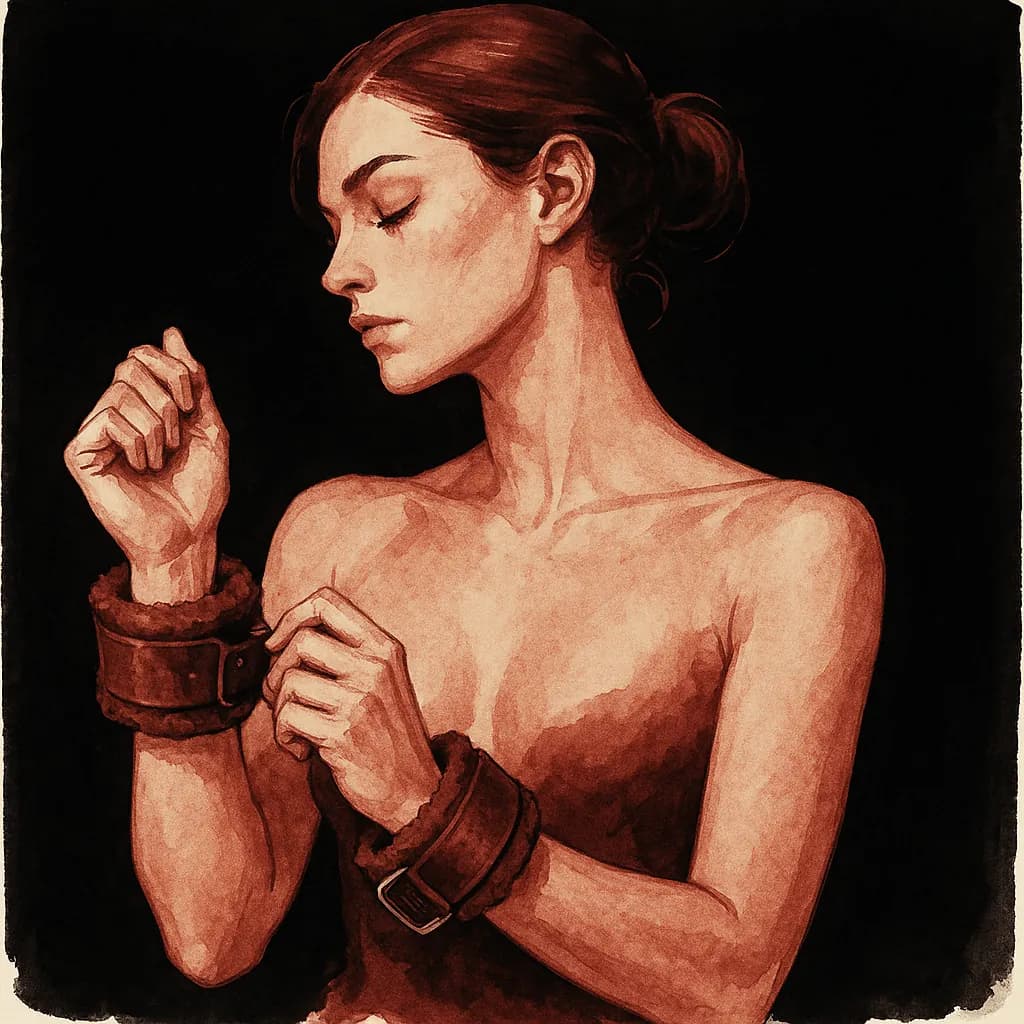
What does BDSM stand for?
There are six words hiding in the four letters, with D and S each used twice:
| Letters | Words | Meaning |
|---|---|---|
| B&D | Bondage and discipline | Restricting movement; agreed rules and consequences |
| D/s | Dominance and submission | Giving or accepting an agreed amount of authority |
| S&M | Sadism and masochism | Enjoying consensual pain, as the giver or receiver |
Cuffs that stop you moving your hands are bondage. So is rope used for restraint. Maybe it's the pressure against your skin you like. Maybe you like having to wait. Your partner won't know until you tell them. Discipline brings rules into the encounter. "Ask before you change position" would be one. Any consequence for breaking a rule needs agreement beforehand. Stopping the activity must always remain an option, without punishment.
D/s needs a decision about authority. Perhaps you'll let your partner choose where you sit for ten minutes, provided they don't touch you. For that time, within that agreement, they're dominant and you're submissive. Tomorrow's plans haven't come into it. Extending those rules into daily life would need a fresh discussion.
S&M is about pain or discomfort that someone enjoys. The sadist wants to give it, the masochist to receive it, with whatever limits they've agreed. A receiver can have very exact requirements. A request for spanking leaves plenty unanswered: how hard, where, whether marks are welcome. It certainly isn't permission to inflict any pain you happen to choose. Migraines don't become enjoyable because someone likes a spanking.
Dom, sub, top and bottom
Here's an arrangement that can confuse the labels: a dominant asks their submissive for a spanking, giving instructions about how they want it done. Receiving the spanking hasn't changed who's giving the orders. In this example, the submissive is the top, because they're doing the activity. The dominant is the bottom, because they're receiving it.
Keep the two questions separate when reading role descriptions. Dom (or Domme) and sub describe authority. Top and bottom describe who does what. A dominant who gives a spanking is also topping; a dominant who receives one is bottoming. Our Dom/top versus sub/bottom guide goes into the variations.
You'll also hear "switch." A switch enjoys more than one role. Perhaps they prefer to submit with one partner and dominate with another. Perhaps the same couple swaps. The word can also describe someone who likes topping and bottoming; you'll need to ask which sense they mean.
A "scene" is the period of BDSM activity. Nobody needs a script. For another example, partners could agree to play with instructions about posture, with no touching, restraints or pain. They'd still be having a D/s scene.
What makes it consensual?
Start with the conversation before anything happens. Vague requests leave a lot of guessing to the other person. "Don't go too far" could mean almost anything. "I need my hands free" is clearer. So is "No insults, and no marks I'll have to hide under a high neckline tomorrow." Your partner gets a say as well. Being the one in charge doesn't mean they owe you every activity you've thought of.
An informed, voluntary yes can become a no at any point. That's the basis set out in NCSF's Consent Counts statement. Agreeing to the cuffs hasn't answered a request for spanking. Nor does yesterday's agreement answer today's. If someone is frightened of saying no, under pressure, or too intoxicated to choose freely, you don't have that basis for consent.
Set a safeword while you're talking this through. In the traffic-light system, "red" ends the activity. "Yellow" calls for a pause or adjustment and a check-in. Have that discussion before the scene: the word is much less useful if you each think it means something different. Where speech will be difficult, work out a nonverbal signal the other person will be able to notice.
Ordinary "stop" still counts. Distress or an inability to communicate clearly means stop as well. Don't wait for the safeword in either case.
Tell your partner beforehand if you'll want some time alone when you're done. Otherwise they might go in for a hug just as you're wishing they'd give you the room. Care after a scene is called aftercare. Tops can want it as well as bottoms. A partner who ignored your limits hasn't put things right just by being affectionate afterwards.
Wanting to be restrained doesn't protect you from the risks of the restraint. Read the beginner's guide before planning a first attempt. For the conversation itself, there's a Yes/No/Maybe list you can work through together.
BDSM without sex or pain
For someone who enjoys restraint, being tied up may be the whole point. They may feel no sexual interest at all. Pain can be off the menu too, even when partners enjoy a D/s scene. Put both questions into your conversation instead of assuming yes to either.
Some people have occasional scenes, perhaps with a partner they see just for that. An ongoing D/s arrangement is a different choice. 24/7 D/s is the term you'll see when the rules continue into daily routines. Even an agreement that lasts for years can be changed or ended. Neither person has signed away their right to say no.
Kink and vanilla
Kink is the wider category. A clothing fetish can sit outside bondage, discipline, power exchange and pain altogether. You'll find other examples in the list of kinks.
Calling sex "vanilla" usually means there's no kink involved. It isn't a permanent membership category. You can want a BDSM scene on Saturday and completely conventional sex on Sunday.