What Is the Kink Scale? The Kink Orientation Scale Explained
Can you measure how kinky someone is? Sort of. Also, be suspicious of the question. One person's outrageously wild is another person's Tuesday night. I've been around the BDSM scene long enough to know that the person who thinks they're the edgiest deviant in the room has usually just scratched the surface.
Well, a team of sex researchers had a go at it. They created what they call a Kink Orientation Scale (KOS), a tool that tries to quantify the ways people experience kink. Think research questionnaire with a faint "wait, how kinky am I?" aftertaste. A number only helps if you know its limits.
I rolled my eyes at first. Kink is personal, varied, and resists being boxed in by its very nature. Anyone who's spent real time in the scene knows that trying to quantify it is a bit like trying to measure how funny someone is. The instrument will always miss something. After reading the paper, though, I softened a bit. They were not sorting people into boring versus deviant. They were looking at the different ways kink shows up in a person's life. That is a more useful question.
What People Mean by a "Kink Scale"
People use "kink scale" for two different things. One is the Kink Orientation Scale, an academic questionnaire about how kink fits into someone's life. The other is the usual internet quiz: Are you kinkier than 80% of people? Vanilla bean or ghost pepper? We've all seen them. Some of us have taken them at 2am and immediately cleared our browser history. I won't claim innocence on that front.
I get the appeal of both. An official kink scale sounds validating, like science finally acknowledging that kink is a natural part of the sexual spectrum and not some offbeat anomaly that needs treating. The casual quizzes tap into our curiosity and our sense of humour. I won't pretend I haven't done a BDSM personality test "just for a laugh" and then spent twenty minutes scrutinising the results.
If you want an exploratory snapshot rather than the research KOS, BeMoreKinky's BDSM interest test summarizes current self-reported interests and does not claim to be a validated scale.
The difference matters, though. The KOS is grounded in research and psychology, published in a peer-reviewed journal and built by actual psychologists, and you can take the survey yourself. It is meant to look at kink across your life, not give you a party trick result. Closer to the Kinsey scale, but for kink. Much less Cosmo-quiz-about-your-star-sign.
Under the score-chasing, there is usually a nervy little question: Am I normal for liking this? Am I kinky enough if I've done X but not Y? People compare themselves, then panic. Too much. Not enough. A scale, even a flawed one, pushes back against the yes/no version of kink. As one commenter on Reddit put it: "Kink is often discussed as binary: you're either kinky or you aren't. However, kink runs on a spectrum, and we all exhibit some degree of kinkiness, whether we self-identify as 'kinky' or not."
Which is something those of us in the kink world have been saying for years. Nice of science to catch up.
Is the Kink Orientation Scale Scientific?
Yes, properly. The KOS comes from a 2024 paper in The Journal of Sex Research that validated the scale across a kink sample of 1,025. Other sex researchers had to review it before publication. This is not some fly-by-night quiz cobbled together by someone with a blog and an opinion.
A research team led by Liam Wignall at the University of Brighton recognised a gap: most existing research on kink focused only on people already active in BDSM communities, the ones who openly call themselves kinky. That misses a lot of people: the private fantasists, the bedroom dabblers, the people who don't attend munches, don't own a FetLife account, and might never use the word "kinky" for themselves. It is a bit like surveying gym members to find out who exercises. Wignall wanted a broader measure that could apply to anyone, from the person with a full dungeon setup to the person with an active imagination and a locked bedside drawer.
They built it in three phases:
-
Phase 1: Item creation. The team reviewed the existing literature, then ran focus groups with both self-identified kinky and non-kinky people. If you only ask scene people what kink means, you get scene answers. They came out of that stage with 27 possible questions, from behaviour to self-image.
-
Phase 2: Testing and trimming. They gave the 27-item survey to 200 university students, who weren't told it was a kink survey upfront. After analysing responses using exploratory factor analysis (a stats technique for finding patterns), they cut the redundant questions and kept 18 that clustered into coherent themes.
-
Phase 3: Validation with the kink community. Next, 1,025 people from online kink communities took the 18-item version. That matters, because a kink scale that falls apart around actual kinksters is not much use. The team also changed the answer format from 7 points to 5. Confirmatory factor analysis found the same five-factor pattern in this group. Also, no shock here: the kink-community sample scored higher than the student sample. A scale should notice that difference.
The researchers are upfront that this is an early attempt at capturing something inherently complex. Wignall called kink "a nebulous construct", and I appreciate that honesty. It's far more convincing than overselling. The paper is open access, so you can check the method yourself. The authors also note that it still needs testing in a broader representative sample, because the student sample was small and the kink sample leaned heavily toward gay and bisexual men recruited online.
The 18-Item Kink Orientation Scale, in Plain English
So what does this thing actually ask? Eighteen questions can't possibly list every kinky act under the sun (there are far too many ways to play for that). For that, you want a proper list of kinks. The scale focuses instead on broader statements about your relationship to kink. Each is a statement you agree or disagree with on a scale of 1 to 5. It is not asking for your sexual CV. It is asking where kink shows up.
A 5 means "very true for me." A 1 means "not really." Add the 18 answers and you get a rough place on the spectrum, from 18 to 90 in the final version. Because the questions cover different parts of life, though, your score is not just a count of fetishes tried.
In plain terms, the KOS is basically asking:
- Do you call yourself kinky?
- What have you actually done?
- Does the gear matter to you?
- Do you know other kink people?
- Can you talk about the sex you want?
Those five themes are where the questions cluster, and they correspond to five dimensions of kink engagement that the researchers identified. Every person's profile leans differently. The scale is trying to catch that messiness. Most kink categories flatten it, which is exactly what annoys me about them.
The Five Areas the Scale Measures
The Kink Orientation Scale identifies five dimensions. Each one is a different way kink can show up in your life:
-
Kink Identity: This is the self-label piece. Is kink part of how you understand yourself, or just something you sometimes do? For some people, the label sits close to the bone. For others, kink is a thing they like in bed and nothing more. The question is simply: how central is this to you?
-
Kink Community: Your involvement with others who share these interests. Do you go to munches, play parties, or workshops? Are you on FetLife or in online forums? Do you have friends you talk BDSM with? For some people, finding other kinksters makes the loneliness drop. I know how powerful that can be. Others are perfectly content exploring kink within their relationship and never telling another soul. There's no requirement to be social about it.
-
Kink Paraphernalia: Gear, clothes, toys, and tools. Do you have a chest full of floggers and cuffs? Does a collar mean something to you, beyond decoration? Some kinksters are gearheads; leather, rope, or latex carries part of the charge. Others are minimalists. I have seen a D/s scene land brutally hard with nothing but voice, eye contact, and willing surrender. The stuff is fun, but it isn't the point.
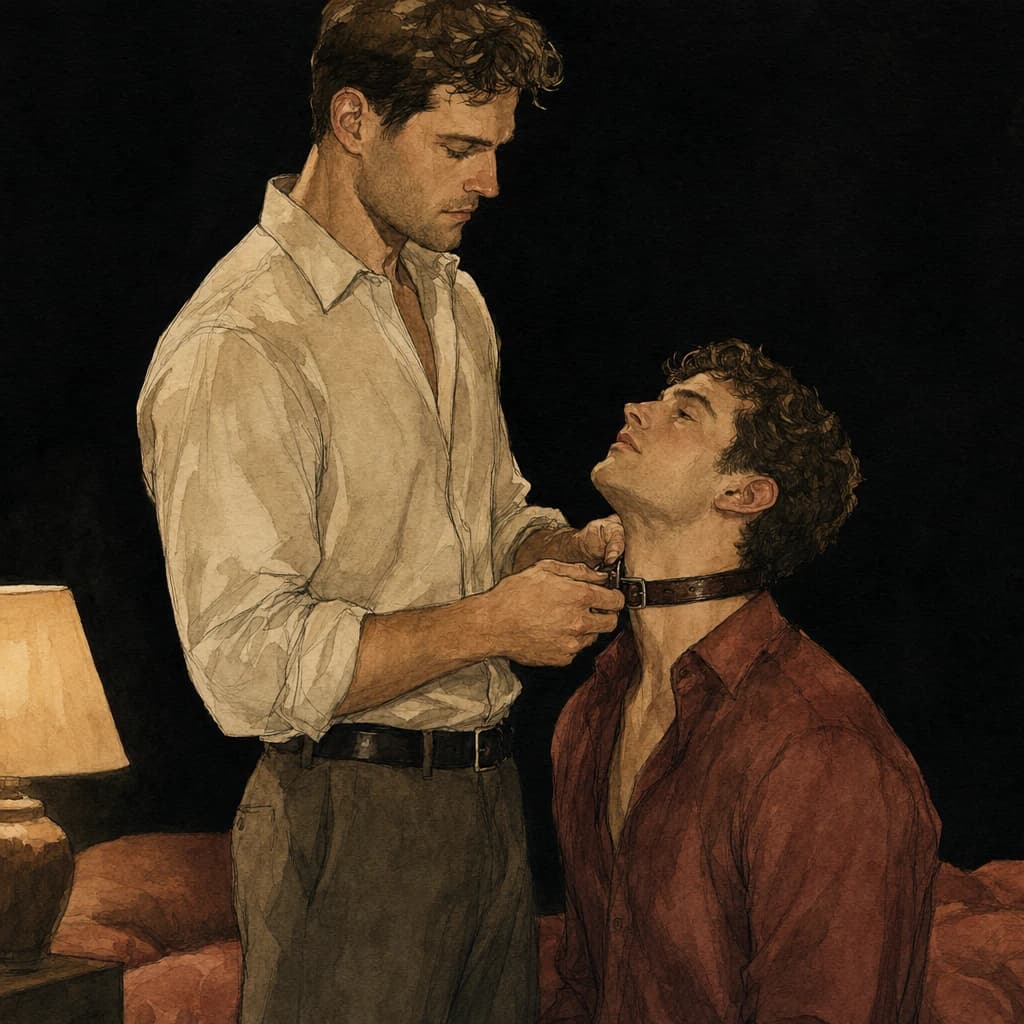
- Kink Practices: What you actually do. This bucket is the actual play: bondage, spanking, role-play, domination, submission, consensual pain, fetish play. Obvious bucket. Still only one bucket. Someone can do kinky things without making kink an identity. Someone else might want kink badly and still not have the right person, privacy, confidence, or timing. Wanting and doing are not the same.
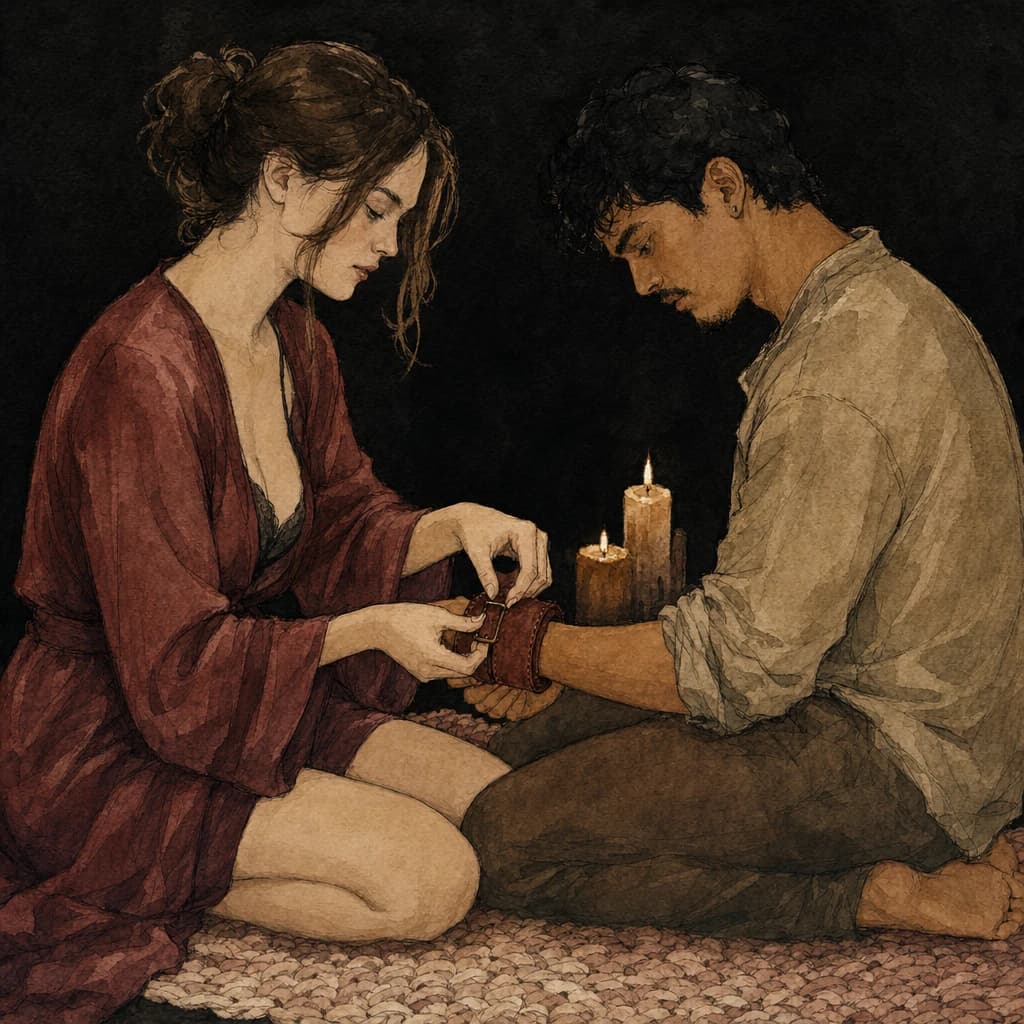
- Sexual Communication: How openly you discuss and negotiate your sexual activities. This one might surprise people who think kink is all about the action. Anyone who's been in a D/s relationship knows better. You negotiate boundaries. You set safewords. You debrief after a heavy scene if either person needs it. Talking keeps the fun from wrecking trust. Qualitative research with BDSM practitioners says the same thing in plainer human terms: safety, consent, aftercare, and responsiveness are processes, not one box you tick before play starts. The researchers found this emerged as its own dimension, which makes complete sense to me. Being able to comfortably say "I'd like you to tie me up" or "let's discuss our limits for this scene" says a lot more about how you relate to kink than whether you own a flogger.
So those are the five: Identity, Community, Paraphernalia, Practices, Communication. It is much more useful than one big "how kinky are you?" number. You might be high on some and low on others.
Desire, Fantasy, Practice, and Identity Are Not the Same Thing
One of the things the KOS gets right is separating dimensions that people constantly blur together. What you want, what you do, and who you are can be related, but they're not identical. Conflating them causes no end of grief, in the kink world and out of it.
You might have fantasies that hit hard: being entirely at someone's mercy, or having complete control over someone who wants to give it. You might never practise them. Maybe you haven't found the right person. Maybe the fantasy is hotter as fantasy and belongs in the theatre of your mind. Does that make you kinky? In your head, absolutely. In practice, your life might look pretty vanilla from the outside.
On the flip side, someone might practise kink because a partner introduced them to it. They enjoy it in the moment, happily going along with bondage scenes or impact play, but they don't think about it otherwise. They don't lie awake craving it. Are they "kinky"? Behaviourally, yes. As an identity? Maybe not.
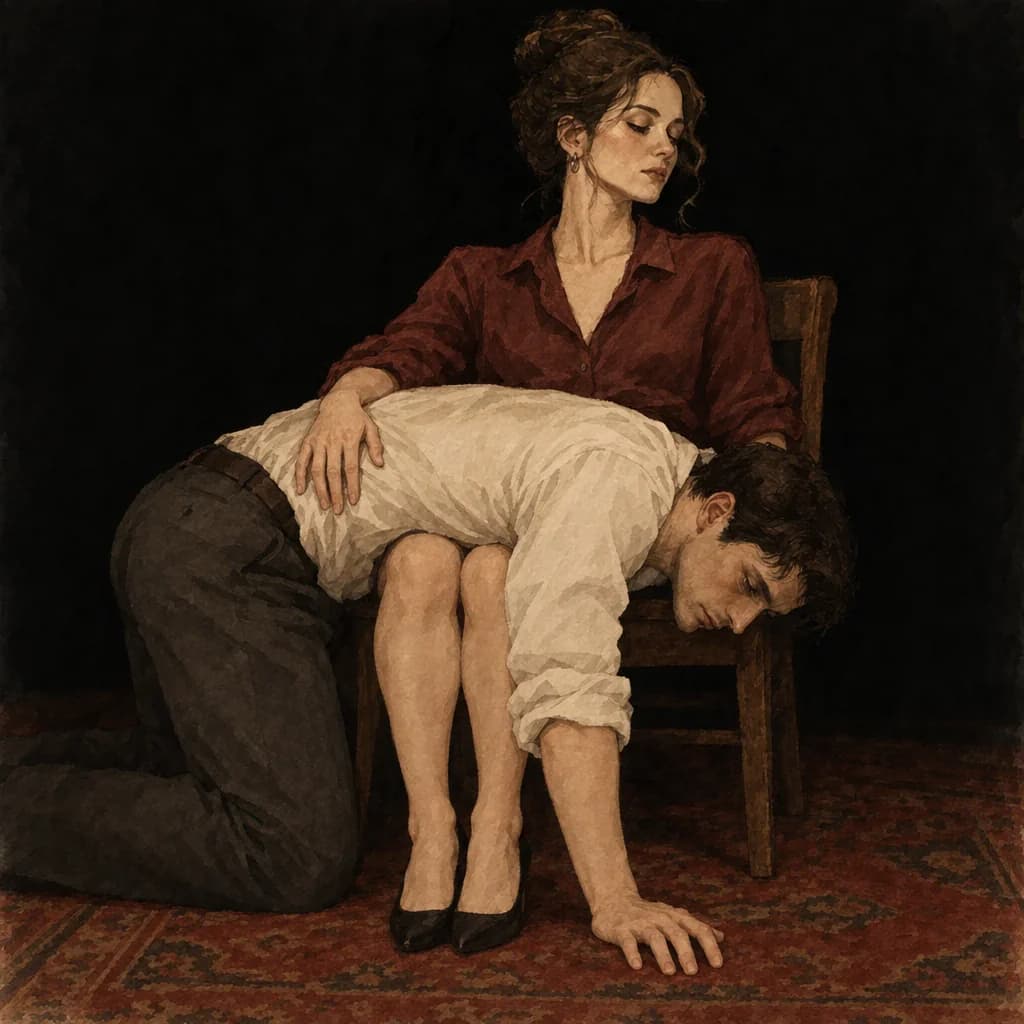
I've seen this split a lot: people with fierce kinky desires and no outlet for them, sometimes for years. The guilt and imposter syndrome that come from not understanding this distinction is the real problem.
Identity adds yet another layer. Do you call yourself kinky? Do you feel any pull toward the subculture? Some people are proud of the label. Others dodge it completely: "I'm just me, and I happen to like certain things in bed." You can enjoy BDSM without black clothes, club nights, or a scene name. Going to clubs doesn't make kink your whole identity either.
The KOS acknowledges this by measuring identity, community, and practices as separate things. Desire creeps in through some items too, questions that implicitly capture whether you want kink even if you're not currently doing it. A person with unfulfilled kink desires might score modestly on practices but higher on identity or paraphernalia. Maybe they've read all the books, bought some gear, and are waiting for the right connection.
Fantasy and reality are not a neat matched set. A fantasy can be powerful and still stay private. You might be perfectly content to keep a scenario in your imagination. Or you might ache to live it out. Either way, it belongs to your erotic life, and no-one gets to tell you it doesn't count. In one large survey of BDSM practitioners, the average first fantasy came years before first practice, which is exactly the kind of gap a blunt "have you done it?" question misses.
This breakdown also helps with imposter syndrome, which turns up in kink spaces more than people admit. If your worry is "Am I allowed to call myself kinky if I've never done [insert edgy activity]?" yes. There is no initiation rite. Fantasy counts. Practice counts. Community counts. Any combination. You don't need a certificate of experience.
So if you take the KOS and find your sub-scores vary wildly, don't be surprised. The researchers themselves observed that many people, especially those in the middle of the spectrum, have a mix-and-match profile, and that mid-range scores can be harder to interpret than a simple high or low. That's not a flaw in you. That's being human.
What a Higher Kink Score Does and Does Not Mean
A higher score is not "better." It does not mean better sex, higher consciousness, or a little trophy marked Kink Champion. A low score does not mean boring. Having spent time around enough kinksters, though, I know some will absolutely treat it like a competition. Please don't be that person. Even in practitioner research, people's reasons for BDSM are mixed: enjoyment, sex, identity, mental health, growth, and connection all show up, so one score cannot tell you what kink is for in someone's life.
A higher KOS score indicates that you engage with kink on more levels: identity, practice, gear, talk, and socialising, more than someone with a lower score. Think of it as an immersion level.
The researchers designed the scale so that most people fall somewhere in the middle, because kink isn't all-or-nothing. As one commenter astutely noted: "I suspect most people will fall somewhere in the middle, and it won't be very clear what those middle scores mean." They're right. A mid-range total might mean you are moderate on everything. Or it might mean you are very high on one dimension and low on the rest. The number alone cannot tell you.
You see the same thing in BeMoreKinky's aggregate activity data. Soft domination and praise sit near the ceiling, with verbal praise, cuddling, and gentle hair-stroking drawing almost universal yes/maybe interest among people who answered those activities. Shift the frame to public or edge humiliation, though, and the pattern flips: activities like embarrassing signs in busy places or eating pet food show very high no-rates. So what does one "kinky" score mean there? Not much on its own. Warm control, praise, degradation, public exposure, pain, service, taboo: different neighborhoods.
A few misconceptions worth addressing:
-
"High score = perverted or abnormal." No; the authors treat kink as a sizable minority phenomenon, not pathology. A high score means your version of normal includes a lot of consensual non-conventional sexuality. It doesn't mean you "need therapy," and frankly, the fact that this even needs saying in 2025 is depressing.
-
"Low score = repressed." Also no. Some kink circles get smug about vanilla sex. Boring. Good sex works for the people having it. Vanilla is a flavour, a perfectly good one. Nobody should use a kink scale to mock someone for scoring low or pressure them to "level up." Consent and comfort come first.
-
"Middle score = indecisive." Mid-scores are common and can mean lots of things. You might have one particular kink you adore and not much interest beyond it. That averages out. Nobody gets to mark you as not kinky enough or not normal enough. Your kink does not have to match mine to be OK.
-
"The number defines you." Definitely not. It is one snapshot. Desire and identity move around. Five years from now, kink might matter more to you, or barely at all. I've seen someone's whole erotic map shift inside one relationship.
-
"Higher score means more extreme acts." Not necessarily. Someone could score high without ever having done the most extreme thing you can imagine, simply because they engage with kink across many areas of life (identity, community, communication, not just practices). The scale measures breadth, not shock factor.
Why Kink Is Hard to Define
Kink resists easy definition. The word is a catch-all. One person's kink is another person's ordinary Saturday. In research terms, kink usually means practices outside whatever a given culture treats as "normative" sex. But norms change. They always have.
Not long ago, oral sex was scandalous in polite society. BDSM was much more underground. Being gay was pathologised by institutions that should have known better. Now plenty of people barely blink at oral sex, kink imagery turns up in fashion magazines, and same-sex relationships are widely accepted in many places. The line between "kinky" and "vanilla" keeps moving. Remember the Fifty Shades boom? Suddenly people were talking about spanking and bondage at brunch, sometimes as if they had invented both. Mostly worse, in the case of Fifty Shades, but that's a rant for another day.
Kink is subjective on a personal level, too. A redditor captured this brilliantly: "Someone who raw-dogs strangers might think they are very kinky while for someone else it's Tuesday." Your baseline does a lot of work here. If you grew up very conservative, even using a vibrator might feel edgy. If you grew up around sexually open people, it might take something rare to register.
There's also the matter of intent, which gets missed a lot. Two couples might do the exact same physical act, say tying hands to the bedposts. For one couple, it is a charged D/s scene with power exchange, trust, headspace, and a particular kind of aliveness. For the other, it is just a bit of added fun. The act alone doesn't define kink. It's the energy, the roles, and the context around it. Those of us who live this understand that instinctively. A pair of handcuffs does not tell the whole story.
And then there's the old scene principle: I don't have to want your kink for your kink to be OK. Even within kink communities, people don't agree on what counts as appealing. Some people are squicked by the very things others need for arousal. So who's kinkier: the latex devotee or the rope fan? The sadist or the bratty switch? The comparison falls apart immediately. Consent and pleasure are the business of the people involved. No-one else's approval is required.
The KOS sidesteps some of that by focusing on self-perception. It doesn't ask "Is doing X kinky?" It asks you, effectively, "Do you consider yourself and your sex life kinky in these ways?" That's smart. It lets each person's internal definition do some of the work. Two people might both strongly agree with "I am a kinky person" for completely different reasons.
Kink is slippery because it is social as well as personal. A 0-to-100 rating cannot catch all of that. Splitting it into five dimensions is more honest. The researchers themselves acknowledged this first version has limits and will likely be refined.
You define your kink. The scale just gives a framework to talk about it.
How Kink Questionnaires Can Help Partners Communicate
Honestly, the best use of any kink questionnaire isn't to slap a label on yourself. It's to start a conversation.
From real experience in D/s dynamics and kink relationships, the hardest part is rarely the doing. It's the asking. It's saying, out loud, to another person: "This is what I want." Horrible little sentence, that one. A quiz can give you a bridge. You can point to the result and say: "Apparently I'm really into toys and role-play. What do you make of that?"
Having something third-party on the table takes the pressure down a notch. It is not "you versus me." It is "us looking at this thing together." Maybe your partner scored high on something you barely ticked. Ask about it. Or maybe you both scored low on communication, which might prompt a mutual: "Maybe we should actually talk more about what we like."
There are already tools designed specifically for this. KinkSheet.com lets partners list their interests, boundaries, and curiosities, then compare results. You both fill it out separately and reveal to each other, so neither feels put on the spot. A Yes/No/Maybe list does the same job in checklist form, and has been a staple in BDSM for years.
The KOS is broader than a list of acts, which helps in a different way. Maybe you hear kink as identity while your partner hears kink as occasional fun. Nobody has to be wrong for that difference to hurt. You might realise: "Oh, that's why I felt stung when you called our kink nights 'just fooling around.' To me, this is part of who I am." And your partner might say: "I enjoy it, but it doesn't define me. I can still respect that it defines you." You only get there by talking. The questionnaire just opens the door.
Sharing results can also reveal unexpected common ground. Maybe you both wanted the same thing and neither of you wanted to say it first. Or the desires do not line up, and at least now the truth is on the table: "You're not into bondage and I love it. Is there a lighter version you'd try, or another way I can get that feeling?" Good sexual relationships are built in those plain, awkward conversations. You find out what each person needs and what can be done with it.

And use positive language when discussing results. "Why did you score so low on X, what's wrong with you?" will shut someone down faster than anything. Try: "You scored high here. Tell me about that?" If something surprises you, get curious before you get judgemental.
Privacy and Safety Before You Take Any Kink Quiz
A quick but important point: if you're taking an online kink quiz, be mindful of your privacy. Sexual data is sensitive. You probably don't want your detailed kink profile floating around on random servers or feeding marketing algorithms.
Some practical tips:
-
Use trusted sources. The original KOS study was open access, which means anyone could theoretically create an online version. Some sites are fine. Some are data traps with a horny wrapper. Stick to well-known sex education sites or sources you trust. PsyPost linked to a survey you can take yourself; that was likely a safe route. KinkSheet is designed to be private; data is stored only long enough to share via a link, and they don't require your name.
-
Stay anonymous. A good quiz shouldn't need your real name or email to give you results. If one asks for that without a clear reason, consider it a red flag. Many people use pseudonyms for kink-related accounts. It's just sensible.
-
Think before sharing on social media. It might be tempting to post "I got 82% kinky!" but publicising that associates your identity with your sexual profile. Share selectively. Your future self will thank you.
-
Watch your device. Shared computer? Use incognito mode, or clear your history after. Autocomplete has ruined more surprises than it should.
-
It's not therapy. A quiz can stir up more than you expected. If something unsettles you, give it time. Talk to a kink-aware therapist if you need to. Any site trying to sell you a "cure" from your results? Red flag.
The KOS researchers anonymised their participants' data and followed ethical guidelines. Treat your own data with similar caution, the same way any responsible BDSM safety framework would tell you to treat your scene information.
Kink Scale vs. BDSM Test vs. Sex Wishlist
There are a few different "kink tests" floating around. Same drawer, different tools.
The Kink Orientation Scale (KOS) is the research one: 18 items across identity, community, paraphernalia, practices, and communication. It won't tell you whether you're a "Dominant" or a "Primal." It is better for asking, "How much space does kink take up in my life?"
BDSM Personality/Role Tests (e.g., BDSMtest.org) are the ones that spit out percentages like "97% Submissive, 45% Primal, 40% Rigger," sometimes splitting hairs between a kink and a fetish. Not science. Still detailed, and sometimes weirdly useful if you answer honestly. A bit like a kinky Myers-Briggs. They give you language for your preferences and tell you which BDSM role you'd be at the play party. Just don't treat the labels as gospel. You are not your percentage breakdown.
Yes/No/Maybe Lists are practical and communication-oriented: the workhorse of BDSM negotiation, and I think every couple could benefit from doing one, kinky or not.
KinkSheet / Want-Will-Won't Surveys are the digital, user-friendly version of the checklist. Sites like KinkSheet.com let you fill out what you want, will do, and won't do, then generate a comparison report with your partner. You both fill it out separately and reveal simultaneously, so nobody feels put on the spot. Useful when you want compatibility and boundaries without a big dramatic sit-down.
Erotic Blueprint or broader sexuality quizzes like Jaiya's Erotic Blueprint categorise you as Energetic, Sensual, Sexual, Kinky, or Shapeshifter. They are broader than kink-specific and won't give you much detail. They can still be a starting point if kink is only one part of what you're trying to understand.
None of these tools are about levelling up. There's no hierarchy that says you start with a checklist and graduate to a personality test. Use whatever helps you understand yourself or communicate with a partner. And if any tool yields a result that doesn't feel right, trust your gut over the score.
When to Use Your Results in a Conversation
You've taken the quiz. You have a result. Now comes the harder bit: saying something to an actual human being.
With a new partner, do not lead with "I scored a 90 on the kink scale" over dinner. Please spare everyone. Mention that you read an interesting article about a kink orientation study and see how they respond. If they seem curious: "It made me realise I'm pretty open to certain things, what about you?" Broad first. Specific later.
With a long-term partner, pick your moment and raise it the way you'd raise any BDSM topic. Frame it as exploration: "Would you be up for taking this quiz with me? Just for fun." Compare results gently. Start with the good surprises: "I loved learning that you're interested in that." With mismatches, keep your voice soft: "I was high on this and you weren't. How do you feel about it?" No blame. No "you're such a prude."
In an existing kink dynamic, even seasoned players can discover new things about themselves. Use the KOS as a check-in: "Let's take this and see if anything's shifted." Relationships evolve and so do desires. It might reveal that you've both become less socially engaged and want to attend an event, or that communication could use some attention.
When you have a specific curiosity and can't figure out how to raise it, a quiz result can be a way in. "Answering these questions made me realise I want to explore [thing]. How would you feel if we tried a little of that?" It frames it as a discovery rather than a demand.
Or not at all. You don't owe anyone your results. If it feels private, keep it private.
If you're introducing this to a partner who's less familiar with kink, lead with warmth. "There's no right or wrong here. We don't have to do anything we're not comfortable with. I'm just curious about us." Then leave space. A quiz score is not a test.
And if the conversation reveals a serious mismatch? That is hard. It is still better than pretending. Maybe you agree to explore a narrow set of things together. Maybe, if your relationship allows it, you set boundaries around individual exploration. A quiz cannot solve that for you. Hiding kinkiness fuels resentment. So does pretending to want kink when you don't. I've seen both.
As one Reddit user put it: "Who cares? Be safe, have fun, and don't sweat the labels."