BDSM Positions: Bondage and Restraint Setups to Try Safely
image
Here's the thing about BDSM positions that nobody tells you when you're starting out: the more securely you're restrained, the more freely your mind can wander. You'd think being tied down would feel limiting, and yes, physically it is, but that drop in your head? That's where it gets good.
Most people aren't turned on by rope itself. They're turned on by that moment between vulnerability and arousal: I can't move, and somehow that's the thing. Being held in place changes the power exchange fast, whether you're tying or being tied. When you're new, the questions are less poetic: where do my hands go, will this hurt, and are we about to have an undignified fight with the bedding?
BDSM is supposed to be negotiated pleasure, not injury with mood lighting. Easton and Hardy's basic point is still the one to keep in mind: each person protects the other's well-being inside the scene. If anyone feels ignored, rushed, or trapped for real, the scene has already gone off track.
Start Here: Consent, Safewords, and Quick-Release Rules for BDSM Positions
The non-negotiable safety basics apply here as everywhere: negotiate what's on the table, set a safeword (or a non-verbal signal if speech is off the table), and keep consent continuous once play starts. A yes to wrists above the head is not automatically a yes to gagging, impact, or a different position.
Bondage adds a few specific rules on top of those.
Have a quick-release plan. Things can change fast when someone is restrained. A limb starts tingling, a rope pinches, panic creeps in. Keep safety shears (blunt-tip scissors designed to cut rope or tape) within arm's reach. If you're using cuffs or locks, have the keys right there, not in a drawer across the room. Many beginner restraint kits use velcro or buckles you can undo in seconds.
Never leave a bound person alone. Not for a minute. Not even for a quick drink or the door. A bound person cannot fix a bad angle, panic, or free a numb hand, so stay close enough to notice. Check in plainly: "How does that feel?" "Still doing okay?" Skip alcohol or drugs before a bondage scene; you both need to be alert and able to react.
Finally, agree on aftercare before you begin, including what you'll both need when the ropes come off (more on that later). If a submissive knows they get water, warmth, or quiet reassurance after, they can often go deeper during the scene.
How to Choose a BDSM Position by Dynamic, Difficulty, and Gear
There are a lot of ways to restrain or position a willing partner, which can feel overwhelming when you're staring at a coil of rope and an eager lover. It helps to think about three things:
1. The power dynamic or mood you want. What feeling are you chasing? Do you want the bound person naked under a gaze they cannot dodge? Or is it more of a playful struggle, wrestling into submission, then melting into surrender? Maybe it's about display and obedience, where a submissive holds a pose purely because they've been told to.
Each position carries a different psychological charge. Kneeling at your Dom's feet with eyes lowered sets a tone of devotion and surrender, no rope needed. Being tied spread-eagle to the bed is a completely different animal: total vulnerability, everything on display, your body literally saying "do what you want." A bent-over position with a leash on emphasises control and a tinge of humiliation. A spooning tie feels intimate and protective. Ask yourself: what emotion or scenario gets me going? Then choose the position that creates that mood.
2. Your experience level and flexibility. Some BDSM positions are as straightforward as tying a wrist to a bedpost. Others look like they require a yoga certification and a degree in knot theory. Don't flatter your skill level. Early scenes belong on a bed, in a chair, against a wall, with restraints you can remove fast. Save the shibari pretzel act for later. I'd rather see someone enjoy a basic position with confidence than attempt something ambitious that ends in pain (and not the fun kind).
Consider your body, too. Bad back? Maybe skip the strenuous bent-over ties. Tight shoulders? Keep arms in front rather than wrenched behind. Most positions can be softened with ordinary padding. A pillow under the hips can save a lower back; a chair can turn a shaky standing scene into something usable. If your body complains, believe it.
3. What you're using. Maybe you have padded wrist restraints from a kit, rope from a class, or one decent scarf in the drawer. Use what you can get off in a hurry, not what photographs well.
For first scenes, choose soft gear you can get off in a hurry; the bed restraints guide covers what to buy and how to rig it. Morpheous makes a similar point in How to Be Kinky, where he recommends long women's scarves for nervous first-timers because the pressure spreads out instead of biting like hemp rope. That framing stuck with me: a scarf communicates intent without demanding commitment, which is exactly what the first time usually needs. And never use rope around the neck or anything that could constrict breathing.
If cuffs are the whole point of the fantasy, use the handcuff sex positions guide instead.
For those specifically drawn to rope bondage (shibari), rope allows for beautiful, intricate ties and a unique full-body sensation of being held. But it comes with genuine risks: nerve compression and circulation loss if done incorrectly. A 2025 bondage-injury abstract specifically flags nerve symptoms and higher risk around suspension, which is the practical reason floor and bed ties should not be treated like load-bearing rope work. If rope is the thing pulling you in, spend the first money on learning, not prettier rope: take a class, read Wiseman or Harrington, and tie on a pillow before a person. Harrington's point about rope basics is useful here: most bondage starts with single-column and double-column ties. Get those dull little fundamentals right. Fancy comes later.
Look at the furniture before the scene starts. Beds forgive a lot. A chair is fine if it stays where you put it. Same for a sofa or a bare patch of floor. Wobble, skidding feet, a loose door frame, a bad shoulder angle: fix that before anyone is tied.
Beginner Bed Bondage Setups: Overhead Wrists and Spread Eagle
The bed is forgiving. You can stay close, stay comfortable, and do aftercare without moving anyone across the room.
Overhead Wrist Restraint: One partner lies face up, wrists secured together or to a safe point above their head. The other partner positions themselves between their legs, beside them, on top, wherever the mood takes you. This is one of the simplest bondage frames you can try and the payoff is immediate. Pinning or tying wrists overhead creates an instant sense of "I'm all yours", and there's that delicious frustration of instinctively reaching for your partner and feeling the tug of the restraints stopping you. It keeps face-to-face intimacy fully intact: eye contact, kissing, whispered words, all while the bound partner squirms. It works for teasing, touch, oral, or sex without requiring a specialised cuff setup.
Don't stretch arms too far; slightly above the head is fine, but there shouldn't be shoulder pain. Put a small pillow under their head. Check wrists aren't turning colours; you should be able to slip two fingers between the restraint and their skin. Since their hands are bound, listen closely for safewords or signs of discomfort because they can't easily push you away. Limit time if arms start going numb and let them down to stretch.
Spread Eagle (All Limbs Tied): The classic four-poster tie. The bound partner lies on the bed, face up or face down, with arms and legs spread toward each corner. Wrists and ankles go to bedposts, frame points, or under-mattress straps, so the body lands in a rough X. People keep coming back to this one because it works. The restrained partner is completely exposed, with every part of their body accessible and nothing hidden. Face-up, the free partner can roam hands, mouth, toys everywhere while the bound partner can only tug helplessly and take it. There's a real psychological release in being unable to close your legs or cover yourself; many submissives find it makes every touch feel amplified, almost unbearably intense. Face-down shifts the access to the back, buttocks, and thighs, perfect for spanking, flogging, massage, or anal play, though you lose the face-to-face connection.
Watch for tingling or coldness in hands and feet; that means circulation is restricted, so loosen up. And be aware this position can be emotionally overwhelming at first; check in verbally and give reassurance. Some people get a rush of vulnerability that borders on stage fright until the pleasure takes over.
Encourage the bound partner to vocalise: moan, nod, use that safeword if needed.
Side-Lying and Spooning Bondage Positions for Less Strain
Side-lying and spooning setups work beautifully when you want something cosy, close, but still restrictive, and they're excellent if either partner has flexibility limitations or wants to avoid the knee and wrist strain of kneeling or doggy-style positions.
The Spooning Tie: Partners lie on their sides, the submissive partner in front, the dominant behind, in classic spoon formation but with a twist. The bottom's wrists are bound together (in front of them or behind their back, whichever is comfortable) and optionally, ankles loosely tied as well. The top wraps around them from behind, holding them close. This is all about closeness and trust. The restrained partner is enveloped in their lover's warmth, unable to reach back but able to feel every move the dominant makes. It can feel incredibly protective; some submissives use this for those moments when they want to feel held and owned at the same time. Yet the helplessness is real: the top can stimulate with a free hand on the front of their body, or penetrate from behind, and the bottom can do precisely nothing about any of it. I've heard people describe this position as almost meditative: you're bound, you can't do much, so you just sink into the sensation of your partner's breathing on your neck and their hand slowly wandering where it wants. The dominant controls the pace completely; the bottom can't grind or thrust to speed things along.
Keep bonds loose; the emphasis is comfort. Soft cuffs or even just holding their wrists in your hand works. If wrists are behind their back, make sure it doesn't force the shoulders into an unnatural position; many people prefer wrists in front, clasped together near their chest, tied with a scarf. A blindfold works beautifully here, narrowing the bound partner's world to pure sensation. Side-lying spares a lot of knee and wrist drama, but it is not magic; the lower arm is usually the first thing to complain. Use pillows early. Neck first, then knees if the angle is pulling. If they need to wriggle, let them out enough to wriggle; do not make them negotiate with the tie.
Scissors Tie (Side Straddle): Put the bottom on their side and have the top straddle the upper thigh, facing them. The upper-side wrist and ankle are the ones to restrain. On the right side, that means left wrist and left ankle. Those can be clipped together, tied to the bed, or controlled by the top. The bottom partner is half free, half bound, a unique headspace where one side of their body is pinned and the other is loose but mostly at the mercy of their partner's weight. The top can hold the connecting rope like a handle, keeping the bottom's leg raised or arm stretched. Penetration works from this angle (and often allows surprising depth due to the scissoring position), as does oral, toys, or just slow teasing with everything nicely displayed.
A single rope loop connecting the top-side wrist and ankle works well, but you can also cuff them separately to anchor points on that side. Don't overdo the twist; the bottom's lower shoulder shouldn't be torqued. Their body can face roughly 45 degrees toward the ceiling, not fully sideways. Watch shoulders and hamstrings. Some bodies hate wrist-to-ankle ties; separate anchor points on the bed may be kinder. If the top arm starts tingling, release it. Communicate: "How does this stretch feel? Too much?" A stretch is fine. Sharp pain means stop.
Spooning ties are a favourite for longer scenes because they allow some rest while maintaining the power dynamic, and they're discreet if thin walls or sleeping housemates are a factor.
Rear-Entry Bondage Setups: Tethered, Collared, or Commanded
Time to get on all fours. Rear-entry positions are common in BDSM because they naturally create a power dynamic, with one person literally behind and above the other, and offer excellent access for penetration, spanking, toys, and everything in between.
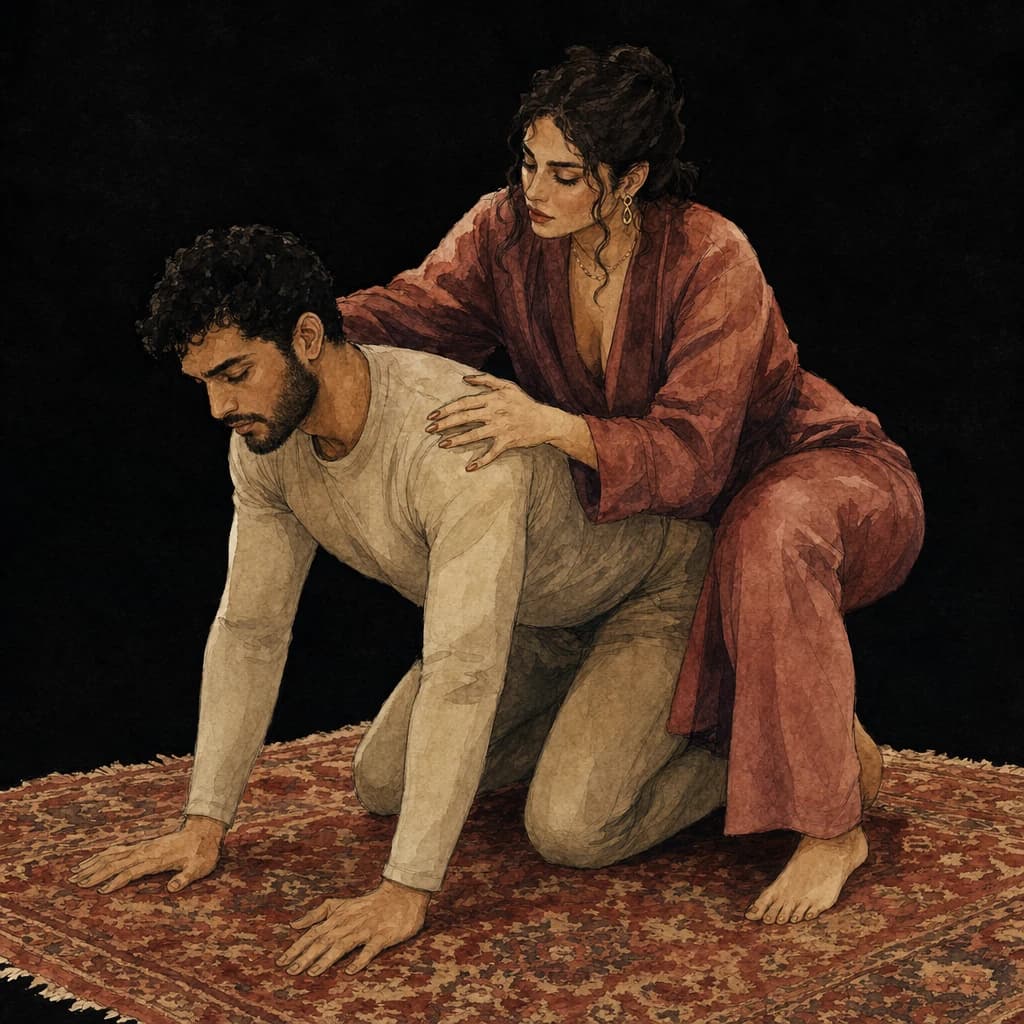
All fours puts the power dynamic of rear-entry bondage right on the surface.
Tethered or Hands-Behind Doggy: The bottom partner is on hands and knees, with wrists held together, loosely tied behind the back, or tethered forward to a stable anchor. In standard doggy, the bottom already tends to feel somewhat submissive: lower down, facing away, being taken from behind. Add restraint and that helplessness spikes. Hands behind the back make the posture vulnerable and obedient; a forward tether creates the feeling of being held in place without forcing the shoulders back.
Keep this simple. Use a soft belt, scarf, rope tie, or connector with enough slack that the bottom can drop to elbows without face-planting. If tying forward, make sure the anchor point won't slide or tip. Knees on a pillow will extend comfortable play time. Hands behind the back are more of a short-term position unless the bottom is quite flexible. Add a physical out, too; face-down words can vanish into the mattress.
Collar and Leash Control: The hands stay free; the collar does the holding. The bottom takes a doggy or kneeling posture while the top guides the angle with light pressure. There is something primal about literal leash control. A tug can arch the submissive's back, pull their head up, or simply serve as a constant reminder of who's in charge. Many submissives find that just wearing a collar shifts them deeply into their headspace; it can symbolise ownership, a transition into their role. During sex from behind, the leash gives the top a "handle" to steady or rhythmically pull the receiving partner back. It can also be used simply to hold them in place while you whisper in their ear or deliver a well-placed smack.
Choose a safe collar: purpose-made BDSM collars are wide, padded, with D-rings for leash attachment and a reliable buckle. Avoid slim chokers or anything that tightens like a noose; breath and blood flow to the brain should never be compromised. You should be able to fit two fingers under the collar. Pull horizontally or upward, not straight back against the throat. Never jerk violently; the leash is a tool for control, not a weapon. The neck is obviously critical. Any dizziness, coughing, or panic from the bottom and you ease off or remove the collar immediately. Many couples use a collar and leash more for symbolic effect than heavy pulling; even just having someone crawl a few paces on a leash can be incredibly erotic without much physical force. Never tie someone by the neck to something, because the risk of choking if they slip or panic is real.
"Puppy Pose" (Full Fours with Training): Less a single position, more a style of play. The bottom is on all fours, possibly with wrists hobbled to ankles to keep them on hands and knees. The top incorporates commands like "stay" and "beg", and physically positions the bottom's limbs: spreading knees wider, pushing shoulders down so chest meets the floor and arse goes up (the classic "presenting" pose). This taps into deeper D/s dynamics and, if it's your thing, humiliation play. The bottom can sink right into submissive headspace: being positioned, lightly trained, praised for compliance, corrected for playful disobedience. The hobble limits how far or fast they can move, which makes teasing and denial particularly effective: the top can circle them, admire the view, occasionally stop to touch or smack or penetrate briefly, and the bottom's world shrinks to waiting for whatever comes next.
A soft rope or purpose-made hogtie connector strap linking each wrist to the corresponding ankle keeps them from standing or sitting back. Leave enough slack that they can lower to elbows without face-planting. Add a spreader bar between the knees for more exposure if you want. Discuss roles first. Some submissives adore pet play, being a puppy or kitten at their dom's feet; others will feel ridiculous or uncomfortable. Only go where it resonates for both of you. Decide if the sub can talk or only vocalise, and have a clear safeword plan (holding a bell they can drop works well if they're staying nonverbal). Watch the lower back during extended time on all fours. Pad under knees and hands (a rug, cushions, even knee pads) for any crawling. Keep sessions relatively short or give stretch breaks.
Some dominants position a mirror so the sub can watch themselves, which can be powerful for both parties.
One thing to flag: breathing. In bent-over positions, look at the chest first: if it is jammed into a mattress or chair, breathing can get weird fast. If they're face-down, turn their head to the side or support them so airways are clear. Postural asphyxia, difficulty breathing from body position, can sneak up, especially in hogtied or sharply bent postures. Panting can be part of the scene. Air hunger, dizziness, glassy eyes, or sudden quiet is not.
Words do a lot here. A loving "Good girl" or a stern "Stay right there" can be the difference between a decent scene and one that lives in your memory for years.
Chair Bondage Setups: Interrogation, Reverse Straddle, and Seated Service
A simple chair is one of the most underrated pieces of bondage furniture you already own. Chair positions evoke interrogation, captivity, power over a prisoner, or they just provide easier angles for specific activities while someone is restrained. Use a chair that cannot roll or tip. Dining chairs and solid armchairs are the obvious picks.
The Interrogation Chair (Bound and Questioned): The bottom partner sits in a straight-backed chair. Wrists are tied to the armrests or behind the chair back. Ankles tied to chair legs or together and secured to the front of the chair. They're immobilised in a seated position. The top can play interrogator, tease with a flogger or vibrator, straddle their lap, or blindfold them and make them guess what's coming next. This has a captured-prisoner fantasy quality to it: spy tied to a chair, naughty student in detention, a lover who's been caught and is about to be interrogated with pleasure until they crack. A chair is boring until someone is tied to it. That contrast is the point. The seated partner is at face level, easy to circle, easy to tease from behind, easy to watch from the front. If you want roleplay, keep it simple: questions, a flashlight, a withheld touch, a playful punishment for a bad answer.
Slatted backs and open arms give you easy anchor points. With an armless chair, run rope around the back and keep it low. Start with the ankles, then the wrists. A gag adds to the interrogation vibe if it's consensual, but if gagged, agree on a non-verbal safeword signal in advance. Check circulation in hands if arms are on armrests; the edge of a chair can press on the underside of the wrist. Don't loop anything around the throat. Keep the chair against a wall on carpet for stability. If they start thrashing, communicate and ease up, because real panic can set in if someone feels they might tip but can't catch themselves. A pillow at the lumbar makes a hard chair tolerable for longer scenes.
Reverse Straddle Chair (Face the Chair Back): The bottom partner straddles the chair facing its back, chest against the backrest, like sitting on a motorcycle backwards. Wrists tied behind their back or to the chair. The top has full access from behind, ideal for spanking, flogging, or penetration. The chair takes the weight that legs normally would, creating a stable platform for bent-over play without the bottom having to balance. The one bound is face-down against the chair, legs open, back arched; it's like a supported bent-over-the-table position but with more stability.
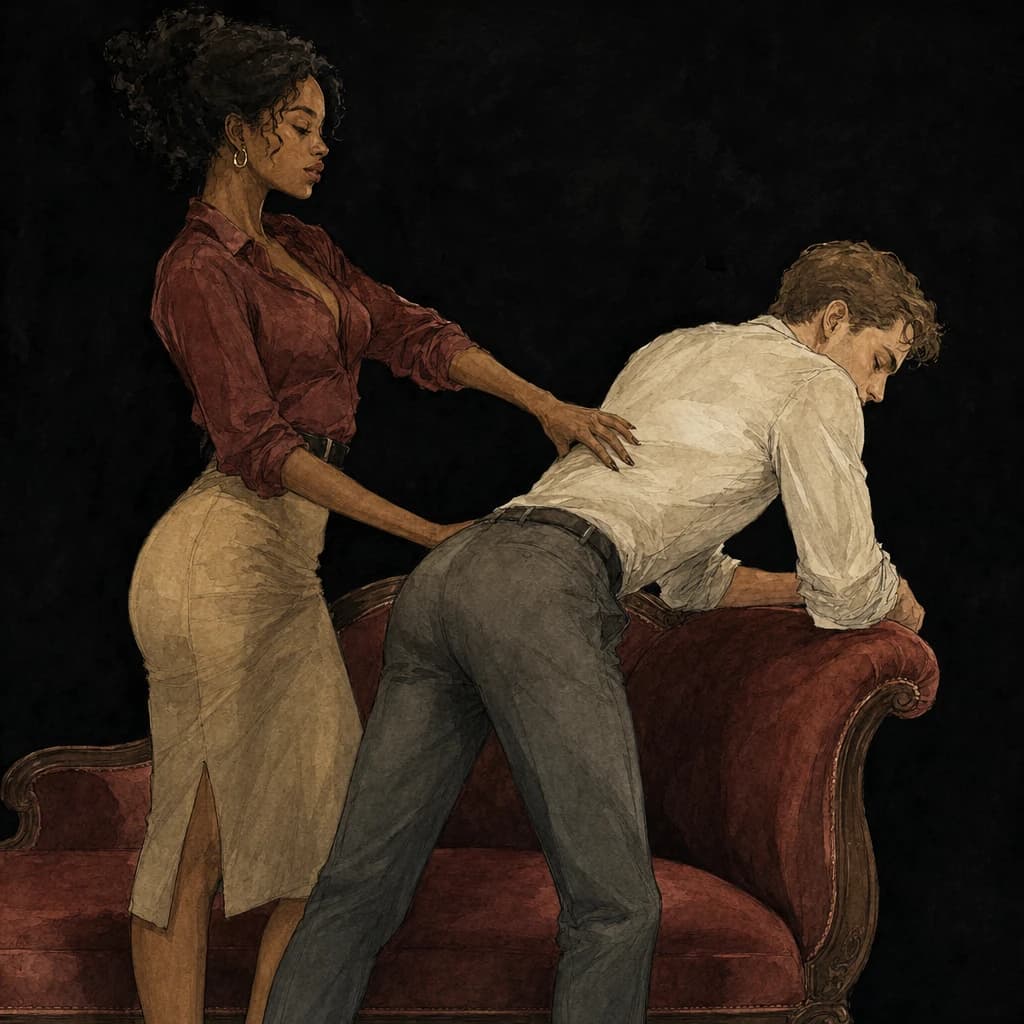
A bent-over position turns furniture into a stable platform for rear-entry play. The top gets a fantastic angle for rear-entry sex, and the chair pins the bottom's torso. If the chair back is low, it's a nice angle for hair-pulling or grabbing the back of the neck. The chair back might rub against their genitals as they rock, too, a bonus bit of friction.
Use a mid-back chair. Pad the top of the chair back with a folded towel so their chest isn't digging into wood. Test this untied first. Add pillows until the height works. Chest crushed into the backrest? Sit them up. If the seat edge bites the thighs, pad it. For impact play, start lighter than usual; a restrained body cannot flinch away, so sensation piles up fast. Warm up slowly.
Seated Service or Tease Scene: A chair also works as a simple service frame: one partner is seated, restrained enough that they cannot grab or chase, while the other controls touch, distance, and pace. That might mean teasing, a lap dance, body worship, foot worship, or oral if you have negotiated it clearly. The point is not the hardware. The point is that the restrained person has to receive, wait, ask, or obey from a fixed position.
Simple works best: secure hands where the shoulders can tolerate it, keep ankles comfortable, and adjust chair height so nobody is straining. A blindfold can amplify anticipation. If anyone's mouth is occupied, treat that as a more advanced dynamic: the bound person must be able to breathe, pull away, and use a nonverbal stop signal. Watch for neck strain if they throw their head back; a small pillow saves a bruise against the chair back.
Test the chair before anyone is helpless. A heavy wooden chair on a rug is usually solid. Lightweight chairs should go against a wall. Skip metal folding chairs; they pinch and fail at the worst possible time. Check knots before the scene starts. Falling while tied is dangerous, and it kills the mood instantly.
Spreader Bar and Thigh Restraint Setups for Controlled Exposure
Sometimes you want a tool that says, "Your legs will stay open exactly how I want them." Enter the spreader bar, a rigid bar with attachment points at each end, used to keep limbs apart, and its softer cousins, thigh straps or wide thigh restraints. These create a fixed distance between body parts and are simpler to use than rope for achieving that forced-open effect.
Standing or Bent-Over with Spreader Bar: A spreader bar attached to the ankles, forcing feet a set distance apart. The bound partner can be standing upright with hands tied overhead, or bent over a bed or table with feet held apart by the bar. The person literally cannot close their legs, which is a primal kind of exposure. Standing with a spreader bar and a blindfold? You're there, spread, naked, waiting, listening for your partner's footsteps as they circle deciding what to tease next. In a bent-over scenario, the bar keeps the stance wide, excellent for rear-entry sex, spanking, or anal play. There's also a certain helpless clumsiness: the person can't run or walk properly, they shuffle at best, which feeds into the feeling of being captured.
A comfortable starting length is roughly shoulder-width. Start there and go wider as flexibility allows. For standing with hands up, make sure the person can support themselves without relying entirely on their hands; have a chair nearby if they need it. For bent-over, supporting weight on a bed or table is ideal. Spreader bars can cause people to lose balance, so supervise closely, especially if blindfolded. Hold them if needed. Use bare feet or flat shoes; socks and heels slide on hard floors. Check feet for coldness or discolouration as you would with wrist restraints. And obviously: never lock a spreader bar and leave, because if something went wrong, they couldn't even walk to safety.
Legs-Up and Apart (Spreader Bar in Air): A more advanced setup: the bar attached to ankles while the partner is on their back with legs raised. Ropes from each end of the bar can run to the headboard or a ceiling hook to hold legs up, or the top can simply hold the bar like handles. Extreme exposure. Legs apart and elevated, genitals and inner thighs completely accessible. It often triggers a feeling of being displayed and used that's a huge turn-on for submissives who enjoy objectification. For the penetrating partner, it's deep access and a visual feast. And because holding legs up is normally tiring, the bar (and ropes) do the work, perfect for "ankles over shoulders" fans who can't hold the position long.
Communicate first: check the person's flexibility. Start with a smaller bar; the wide split plus gravity is intense on hamstrings. Cushions under hips and lower back reduce spinal strain. If the top holds the bar, it becomes symbolically powerful, literally holding someone's legs apart. Stretch beforehand if possible. Keep sessions short if there's lower back or hip pressure. Move slowly when adjusting position to avoid hyperextending a knee or ankle. Let legs down gently and slowly when done; some people feel light-headed after having legs elevated for a while. Have quick-release clips on overhead ropes so you can lower legs fast if needed.
Thigh Restraints ("Frogtie" without rope): If you don't have a spreader bar, wide thigh restraints achieve a similar effect. Straps around each thigh clipped to wrist restraints on the same side create a frogtie position (thighs raised, knees bent, legs spread) without any rope knowledge. It gives that helpless, spread vulnerability: legs can't straighten, knees are apart, genitals fully accessible. Because wrists are connected to thighs, the sub also can't push the top away or touch themselves.
Four restraints: two for wrists, two for thighs. Clip left wrist to left thigh, right to right, with legs bent. Adjust so knees are comfortably apart, not so tight they can't breathe or will cramp. Padding under the tailbone helps if lying flat. If arms are attached to legs, watch the shoulder angle; wrists in front of the body clipped to thighs is better than behind. Check hands for circulation. If the person has any knee issues, support under the knee and monitor. Move them gently if repositioning; one wrong twist with ankles and knees tied can tweak something.
For the submissive, the exposure can be intense: "I can't hide anything, I can't close my legs, I'm just here", which is either deeply erotic or deeply intimidating, depending on the person. Start narrow and go wider as they relax, both physically and mentally.
For tops, there's a ritual to these tools that's worth savouring. Slowly attaching a bar, tightening the straps that draw their legs apart; these can be ceremonial moments, a signal that the power exchange is now fully in play. Don't rush them. Keep eye contact if that steadies them, or a hand on the thigh if that is your style.
One caution: these positions tend to lead to intense stimulation because everything is so accessible. Orgasms can hit harder, or the sub might feel overstimulated. That's often wonderful, but watch for overwhelm. A "yellow" may mean the vibrator stops while the restraints stay on. "I can't take it" can be sexy theater or a real warning; learn the difference by checking, not guessing. When you are the dominant, caution is part of the job. If they are held open already, you can take your time.
Hogtie, Frogtie, and Crab Tie: When These Are Too Advanced
Now for the ties that look spectacular in photos and carry genuine risk in practice. These are not starter ties. Hogties, frogties, and crab ties can look beautiful, but they put pressure on joints, breathing, and nerves fast.
Hogtie: Wrists and ankles go behind the back; then you link the two. The person is face-down, legs drawn toward hands. A loose version leaves breathing room and a foot or more between wrists and ankles; a strict version cinches the body into an arch. Visually, a hogtie screams total captivity. In a hogtie, helplessness is not a metaphor. The bound person may only be able to twitch and breathe and wait. For the top, the draw is simple and not subtle: the body in front of you has stopped steering. Spanking, toys, sex from behind, or pure denial all land differently when the bottom cannot reach back or turn around.
But hogties put serious strain on the body. The position can compress the chest and abdomen, making breathing shallow if they're face-down and arched. Shoulders are rotated back, risking injury in less flexible people. Nerves in the upper arms can get pinched quickly. And because the person is so immobilised, if something does hurt, whether a shoulder cramp or a wave of panic, they may struggle to communicate, and they absolutely cannot free themselves. This is high-trust, high-skill territory.
Try a semi-hogtie first: wrists and ankles bound separately, connected with a longer rope leaving 1.5 to 2 feet of space between them. The bottom can roll to their side, which relieves pressure. Or hogtie them but prop them up with a firm pillow under the chest to reduce the arch and help breathing. Keep sessions very short, a few minutes, especially the first time. Check in every minute or two. The moment you hear distress or they stop responding, stop and untie immediately. Have safety shears ready, because rope jams under a wriggling body and knots become impossible. Postural asphyxia is a real risk, so never leave someone hogtied alone for even a second. One book I find myself returning to on this is How to Be Kinkier by Morpheous; he teaches a hog-tie class and makes a point I've kept in mind ever since: on a hard surface, a hogtied person's diaphragm will start to struggle after roughly fifteen minutes. His fix is simple: if breathing becomes laboured, roll them onto their side. It is easy to miss that when you're focused on knots and mood. Also be prepared: hogties can produce strong emotional reactions: tears, catharsis, overwhelming vulnerability. That can be exactly what someone wants, but have plenty of comfort and aftercare ready.
Frogtie: Each ankle bound to the corresponding thigh, rope wrapping around calf and thigh to hold legs folded. The person can be on their knees (thighs apart, frog-legged) or on their back with legs frogged up. Arms may be free or tied separately. The frogged legs naturally spread the knees, giving fantastic genital access without requiring a painful split. The person can't straighten their legs but often can still crawl or roll; they can try to escape, but won't get far. There's something primal about it, the forced-open posture, the vulnerability. And for those who find hogties claustrophobic, frogties offer more wiggle room and easier breathing.
Knee strain is real if the person isn't used to sitting back on their heels; pad under knees. Circulation to the lower legs can suffer if ropes are too tight around the thighs, and the lateral femoral cutaneous nerve in the upper thigh area can get compressed. Being frogtied can also leave someone feeling extremely exposed emotionally; the inability to close their legs has a psychological edge that's hot for some and overwhelming for others. Loop each ankle to its thigh with the simplest tie you can release, or skip rope and use frogtie straps or bondage tape. Leave visible slack; constant pressure is the thing that turns this from sexy to stupid. Do one leg at a time and check comfort before doing the second. Keep them on something soft, since hard floors and kneeling are a terrible combination. Monitor feet for tingling or coldness. Do not leave someone frogged forever. Build in breaks, and use carabiners or slipknots so release is boringly fast. Nobody wants a dramatic knot-fight while the bottom is asking to get out.
Crab Tie: The lesser-known sibling of the hogtie and frogtie, but no less intense. A crab tie puts the person in a seated squat with their knees drawn up and spread wide, then bound, with wrists often tied to ankles or to a bar across their shins, and sometimes a rope around the back connecting everything. The result is a compact, frog-like crouch with the torso upright (or slightly forward), legs splayed, and arms pinned in front or at the sides. Think of how a crab sits low and wide; that's roughly the shape. It's deeply exposing, with everything on display from the front, and the bound person can barely shift. Like a frogtie, genitals are completely accessible, but the upright position means face-to-face contact is possible, which adds emotional intensity. The position also creates a feeling of being compacted and contained that some submissives find psychologically overwhelming in the best way: you're literally folded into a small package, powerless.
Crab ties ask a lot from hips, knees, and ankles. A squat is work before rope gets involved, so only try it with someone whose range of motion you already know. If they fold forward, breath gets cramped. Rope that bites will make feet and legs go numb. Use a low stool, firm pillows, or a platform so the squat is supported and the joints are not doing all the work. Tie loosely. Check in often. Do not turn it into an endurance test. Trembling, sharp pain, numbness, or bad breathing means rope off. As with all advanced ties, have shears ready and never leave them alone. Try the squat without rope first; if two untied minutes are miserable, bondage will not improve it.
Same warning for all three: they can be beautiful and still injure someone the second you get cocky. Do not copy a video and hope. Build up through easier ties, learn your partner's flexibility, and treat these as brief high points, not positions to park someone in. If this is where your interest is heading, get hands-on rope instruction. Your partner's body, and their trust in you, deserves that investment.
Gear-Free Positions You Hold on Command
People forget this: you can get a strong BDSM effect with no rope at all. Some of the strongest positions are just bodies, instructions, and the choice to obey: using your body to express surrender, devotion, or obedience. The restraint is entirely psychological. You hold the position because you've been told to, because you want to, and because the act of holding it deepens your submission. For the full catalogue of formal kneels, presentation stances, and ritual postures, see our guide to BDSM submissive positions.

Guiding a partner into a kneel sets the tone before any rope appears.
Kneeling (Nadu/Standard Kneel): Kneeling at someone's feet is old, loaded, and instantly legible in a BDSM scene. The physical act of lowering yourself creates a genuine shift in headspace for both parties. The submissive feels smaller, more vulnerable, more attentive. The Dominant literally looks down at their partner, which reinforces authority without a word being spoken. Use it to greet a Dominant, to wait, or to begin a scene.
Presenting / Display: The submissive positions themselves to show their body to the Dominant. This varies enormously: it might mean standing with hands behind the head, legs apart, so every inch is visible. Or bending over and reaching back to spread themselves. Or lying back with knees drawn up and open. The common thread is that the pose is explicitly about being looked at, appraised, and being vulnerable to the Dominant's gaze. Being told to present, to arrange your body specifically for someone else's visual pleasure, is an extraordinary act of vulnerability. For the Dominant, giving that command and watching their submissive comply is its own reward.
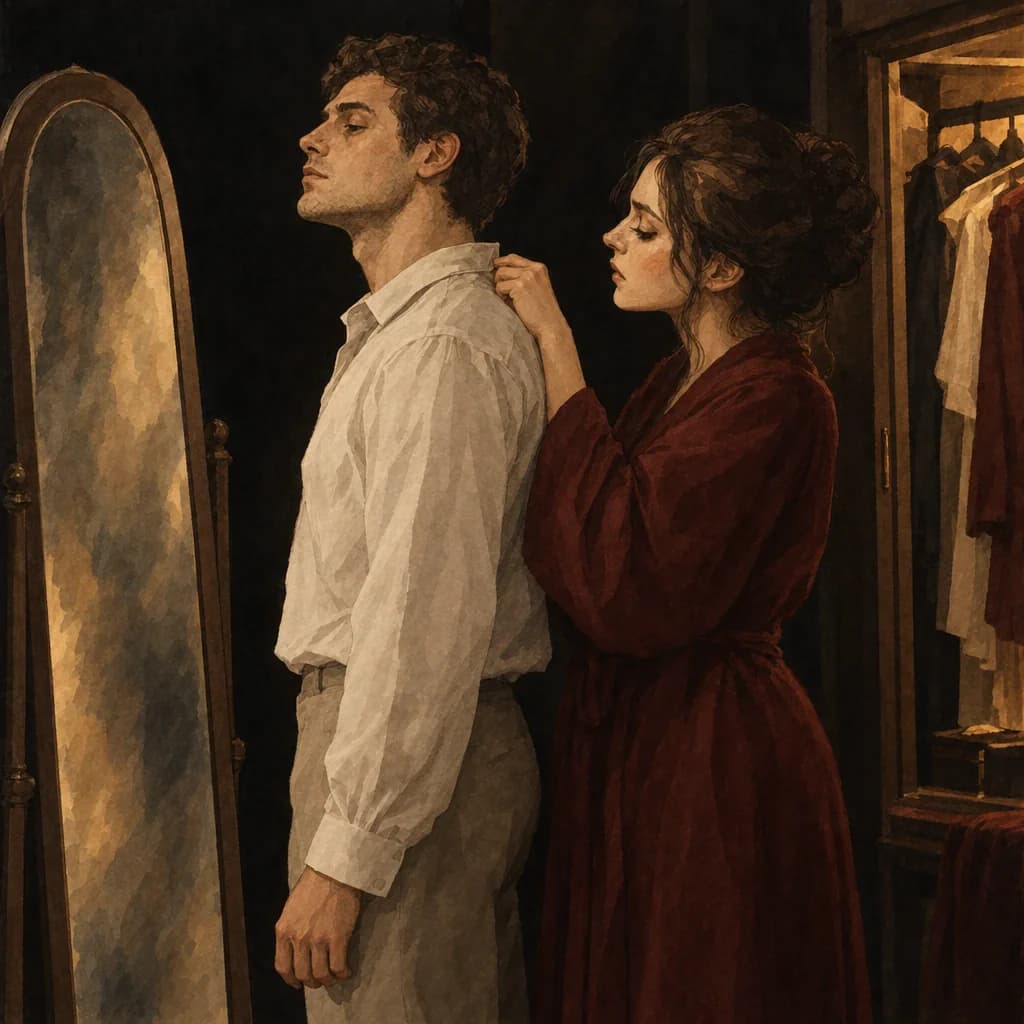
Presenting on command is an act of vulnerability that needs no rope. There's also a beautiful tension in it: the submissive holds still while the Dominant looks, circles, maybe touches, maybe doesn't; the anticipation alone can be electric.
Head Down, Arse Up (Prayer Pose): Face and chest to the floor or bed, arms forward or tucked in, arse high. The "prayer" nickname comes from the prostration shape. This is submission made physical: bowing, offering, presenting your most vulnerable parts while your face is hidden. It's often used as a position of waiting, punishment (the exposed backside is perfectly placed for spanking), or simply as a demonstration of devotion. Many submissives find that the act of pressing their forehead to the floor and raising their arse creates an almost instant headspace shift; it's hard to feel anything but submissive in this position.
Standing at Attention: A stricter protocol pose carrying that same energy of discipline, obedience, and readiness to serve. Standing still while someone circles you and decides what happens next can be its own torture, no gear required.
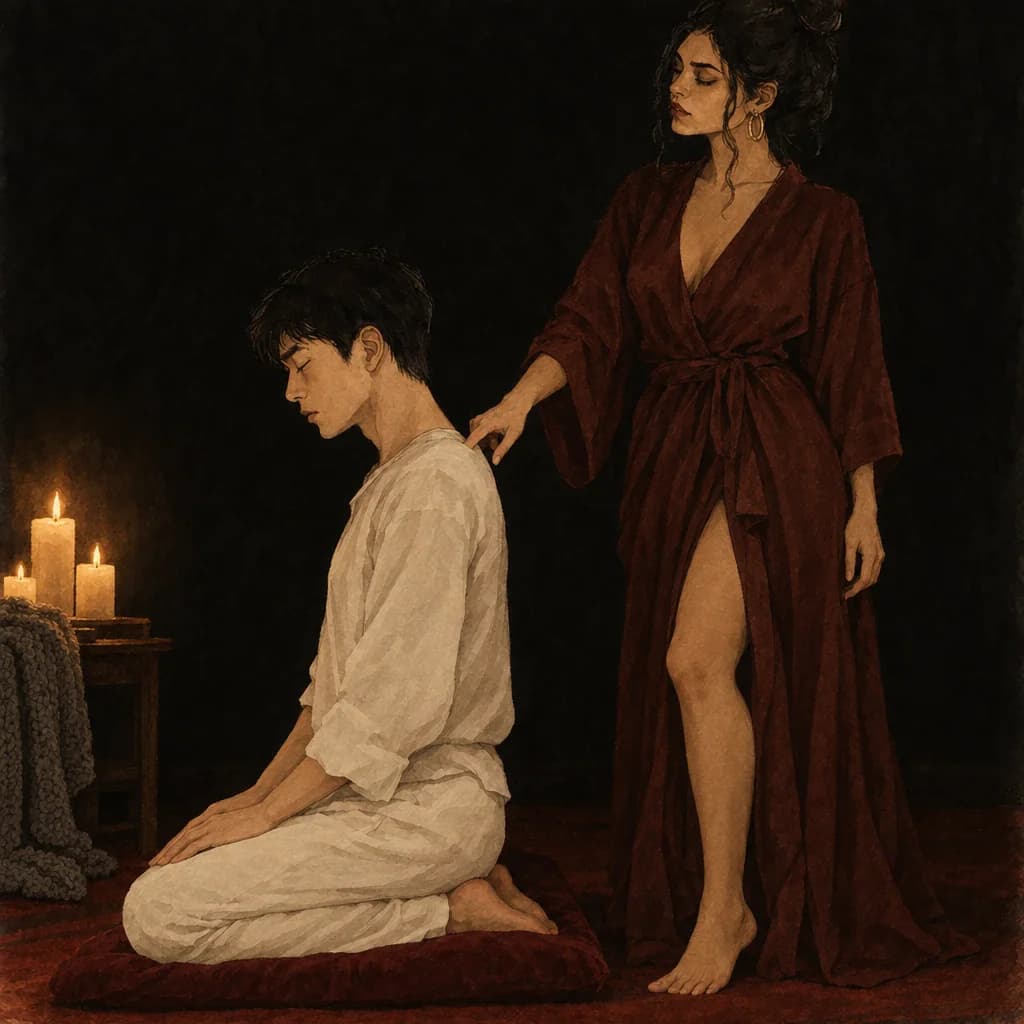
Inspecting posture lets the Dominant build the dynamic before deciding what comes next.
These poses can also be woven into bondage scenes as transitions, "kneel while I prepare the restraints", or used on their own for lighter D/s play that doesn't require the setup and safety planning of full bondage.
Aftercare: What Happens When the Scene Ends
This section is non-negotiable. I don't care how casual the scene was, how experienced you both are, or how fine everyone seems: aftercare matters.
Start with the body. Restraints off slowly, then check wrists and ankles: colour, warmth, any numbness that hasn't cleared. Water, something to eat, warmth. Rub sore spots only if touch is wanted. If a mark, numb patch, or joint pain worries you after the scene, get care and be factual about what happened. Emotional aftercare comes next: stay present, say what you liked, and let the room be quiet if that's what's needed. BDSM aftercare covers the full process, including subdrop, which can arrive hours or days later and is easy to mistake for something else.
Positions are only frames. A wrist tie, a suspension, kneeling by the bed: any of them can be flat or unforgettable. The difference is whether trust, appetite, and care are still in the room. Start simple. Respect limits. Build from there.